Quick Answer
Who provides commercial plumbing service on Long Island?
Sal Manzo Plumbing, Heating & Cooling provides commercial plumbing for restaurants, coffee shops,
offices, retail spaces, professional and medical offices, multifamily and mixed-use properties, property managers, community facilities, and other light-commercial locations across Nassau County and nearby western Suffolk. Service can include urgent leaks and backups, drain and sewer problems, restroom fixtures, water heaters, piping, water and gas lines, scheduled maintenance planning, and plumbing support for renovations or tenant improvements. Call (516) 783-0490 and describe the property, equipment, affected areas, access requirements, and operating-hour constraints.
Commercial Plumbing Authority
Commercial plumbing is not residential plumbing with a business name on the invoice
The same pipe or fixture can create a very different problem when customers, tenants, employees, inventory, food service, scheduled appointments, occupied restrooms, or building access are involved.
A leaking faucet in a home is inconvenient. A leaking hand sink in a restaurant can disrupt a station, spread water onto a working floor, and create a sanitation concern. One clogged toilet in a house affects a family. One failed restroom in a busy office or retail location may affect dozens of people and force the property manager to make an immediate operating decision. A water heater that recovers slowly at home is frustrating. A hot-water failure in a commercial kitchen, salon, fitness facility, or multi-unit property can affect the entire workday.
Manzo’s commercial service is organized around those consequences. The goal is to identify the active plumbing failure, protect the property, restore the affected service when practical, and explain any larger repair, replacement, maintenance, or project-planning need. Businesses in Wantagh can also review the dedicated Wantagh commercial plumbing page for local service details.
Commercial callers should begin with the main symptom and operational impact, not a guess at the part. Tell the office whether water is active, sewage is present, hot water is unavailable, one restroom or the entire building is affected, the property is occupied, a shutoff is accessible, and there is a limited servicez window. Those facts help route the call more intelligently.
Urgent Commercial Plumbing
When water, sewage, or lost service threatens the business, start with containment and clear information
For urgent service, use Manzo’s Long Island emergency plumbing page. Active or hidden water problems may also require leak detection and repair. The commercial hub keeps those service paths connected so the caller does not have to diagnose the website before the plumbing.
Active leaks and burst piping
Call when water is spreading from a pipe, valve, supply line, ceiling, wall, mechanical area, fixture connection, water heater, or unknown source. If a safe local shutoff stops the water, use it. If not, the main shutoff may be necessary. Protect electrical equipment and keep people away from wet areas.
Sewer backups and overflows
Stop water use when sewage appears in toilets, floor drains, sinks, tubs, or lower-level fixtures.
Continued flushing, dishwashing, laundry, or fixture use can feed the backup. Commercial drain and sewer diagnosis may involve clearing, camera inspection, hydro jetting, or repair planning.
No water or low pressure
A building-wide loss of water, sudden pressure drop, or only one affected fixture can point to very
different causes. Confirm whether the utility, main water line, shutoff, pressure regulation, frozen piping, fixture valve, or internal distribution may be involved.
No hot water
Hot-water loss can interrupt restrooms, food service, cleaning, tenant use, salons, fitness facilities, and other operations. Share the water-heater type, fuel, error code, leak status, demand pattern, and whether the failure affects one area or the entire property.
Before the plumber arrives
- Stop using affected fixtures or drains
- Use a known local shutoff only if it can be operated safely
- Move inventory, electronics, files, and furniture away from water
- Keep employees, tenants, and customers out of contaminated or slippery areas
- Document where the problem started and what happened immediately before it
- Identify the on-site decision maker and access contact
Call emergency services or the utility first when
- There is a gas odor, fire, smoke, or carbon-monoxide alarm
- Water is contacting energized electrical equipment
- A ceiling is sagging or structural damage appears possible
- Sewage exposure creates an immediate health or occupancy concern
- The municipal water or gas service may be involved
- The building evacuation or emergency plan has been activated
For urgent service, use Manzo’s Long Island emergency plumbing page. Active or hidden water problems may also require leak detection and repair. The commercial hub keeps those service paths connected so the caller does not have to diagnose the website before the plumbing.
Commercial Plumbing Services
One authority page connecting the plumbing systems a Long Island property depends on
Manzo’s current commercial capability includes plumbing, drain and sewer, water-heater, fixture, leak, pipe, gas-line, emergency, maintenance, and renovation-related service for appropriate light-commercial properties. Specialized services should only be added when the company confirms the required qualification, equipment, certification, and scope.
Commercial leak repair
Visible leaks, hidden-leak symptoms, failed supply lines, corroded valves, loose connections, ceiling or wall moisture, recurring meter movement, and plumbing failures that threaten finishes, equipment, or tenant spaces.
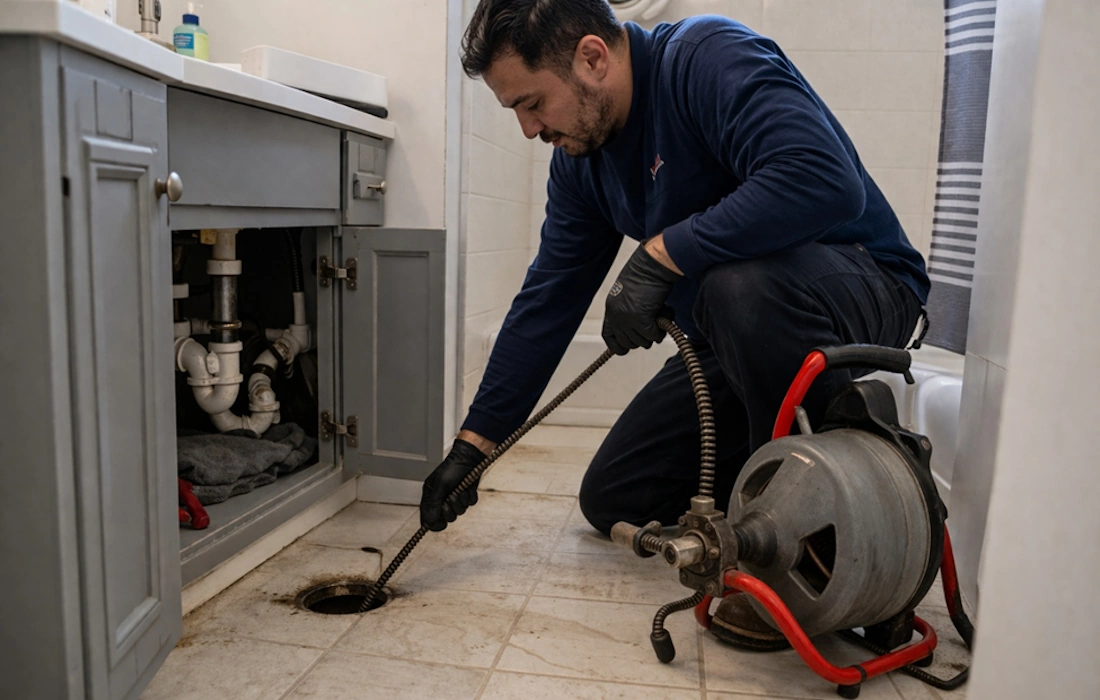
Drain and sewer service
Slow commercial drains, recurring clogs, grease and organic buildup, branch-line problems, main-line backups, floor-drain trouble, odors, camera inspection, cleaning, hydro jetting when appropriate, andsewer repair planning.
Restroom fixtures
Commercial toilets, urinals, flushometers, sensor controls, faucets, sinks, lavatories, shutoffs, supply lines, traps, drain connections, dispensers that affect plumbing access, and replacement planning.
Water-heater service
No hot water, leaking tanks, insufficient recovery, temperature instability, tank and tankless systems, replacement planning, installation requirements, circulation concerns, and demand evaluation.
Pipe, valve, and water-line work
Failed piping, corrosion, pressure concerns, distribution problems, water-service issues, isolation
valves, shutoff planning, partial or broader repiping, and coordination around occupied spaces.
Gas piping support
Confirmed Manzo gas-line services for leaks, repairs, piping changes, and related work within company scope. Gas odors require immediate evacuation and utility or emergency contact before routine service.
Fixture and equipment connections
Commercial sinks, faucets, prep sinks, mop or utility sinks, food-service fixture connections, garbage disposals, water-supplied equipment, drains, supply lines, traps, valves, and replacement coordination.
Preventive maintenance planning
Recurring drain and fixture history, leak checks, valve access, water-heater condition, seasonal risks, service records, priority assets, shutdown planning, and a practical list of problems to address before they interrupt operations.
Multifamily and mixed-use service
Leaks between units, shared stacks, common-area drains, building water and hot-water issues, unit access, tenant communication, repeated fixture failures, and determining whether a symptom is building-wide.
Property-manager support
Clear site contacts, access instructions, unit or suite identification, vendor requirements, approval limits, photos, service history, tenant impact, and written next-step information for ownership or management review.
Industries & Property Types
Commercial plumbing planned around how the building is actually used
Property type changes the urgency, access, demand, sanitation concerns, fixture use, shutdown options, and communication needed. These are service categories, not claims that every specialized system inside every commercial building falls within Manzo’s scope.
Restaurants and coffee shops
Prep sinks, hand sinks, bar sinks, faucets, drains, disposals, water heaters, restroom fixtures, floor
drains, supply lines, shutoffs, recurring clogs, hot-water demand, and urgent service planned around
operating hours.
Offices and professional suites
Employee and public restrooms, break-room sinks, water heaters, leaks, fixtures, supply lines, recurrin clogs, tenant-space plumbing, and work that limits disruption to appointments and staff.
Retail and shopping properties
Customer restrooms, employee facilities, break rooms, mop sinks, water lines, drains, leaks, common-area plumbing, tenant coordination, occupied-hour access, and recurring maintenance concerns.
Medical and dental offices
Restroom, handwashing, sink, drain, water-heater, leak, and general plumbing service within Manzo’s
confirmed scope. This page does not claim medical-gas, laboratory-process, sterilization-equipment, or specialized clinical piping services.
Multifamily and mixed-use buildings
Unit and common-area leaks, stacks, shared drains, sewer backups, water and hot-water trouble, fixture replacement, tenant access, shutoffs, recurring building patterns, and coordination with management.
Property-management portfolios
Priority-property information, access contacts, vendor requirements, recurring issue history, photos, approval procedures, after-hours contacts, asset notes, and consistent communication across multiple sites.
Churches and community facilities
Restrooms, kitchens, meeting spaces, water heaters, drains, leaks, fixture upgrades, seasonal use, even schedules, and practical planning for facilities that may sit lightly used and then become very busy.
When calling, describe the building and business rather than only saying “commercial.” A restaurant with an active kitchen backup, a three-story multifamily building with water between units, a retail store with one public restroom, and an office suite with a leaking break-room sink are four different routing decisions. Better information at scheduling leads to a better prepared visit.
Restaurant & Food-Service Plumbing
Protect the work areas that depend on water, drainage, fixtures, and reliable hot water
Restaurants, coffee shops, bakeries, delis, bars, and other food-service locations place sustained demand on sinks, faucets, drains, water heaters, disposals, floor drains, supply lines, shutoffs, and restroom fixtures. The useful service question is not merely “what is leaking?” It is “what operation does this affect, how much water use can stop, and what other fixtures share the line?”
A slow prep sink may be a local trap or branch-line problem. Several slow sinks, a gurgling floor drain, and water rising elsewhere can point to a larger drain or sewer restriction. A hand-sink faucet that will not operate correctly affects more than convenience. A water heater that cannot recover may need diagnosis, sizing review, repair, or replacement planning. A failed shutoff can turn a fixture repair into a broader shutdown if isolation is not possible.
Commercial kitchen service may connect to faucet, sink, and fixture repair, garbage-disposal service, drain cleaning, hydro jetting, sewer-camera inspection, and commercial water-heater service. The technician should determine which path fits the actual problem rather than automatically recommending the largest machine on the truck.
Commercial Restrooms
Toilets, urinals, flushometers, faucets, sinks, and restroom plumbing that must work under repeated use
Commercial restrooms fail differently because fixtures are used more often, many users do not report early symptoms, sensor and flushometer components add complexity, and one restroom closure can affect the whole business.
Commercial toilets and flushometers
Service may include manual or sensor flush valves, diaphragms, pistons, handles, solenoids, batteries, control stops, vacuum breakers, leaks, weak or continuous flushing, wall-hung and floor-mounted bowls, carriers within accessible scope, clogs, seals, replacement planning, and matching valve and fixture requirements. For full toilet coverage, use the Long Island toilet repair and installation
hub.
Urinals and flush valves
Urinal problems can include continuous flow, weak flushes, sensor failure, leaking connections, odors, drainage problems, mineral buildup, failed cartridges or diaphragms, and mismatched fixture or valve performance. EPA WaterSense notes that qualifying flushing urinals use no more than 0.5 gallons per flush and are independently certified for performance.
Lavatories, faucets, and drains
Public and employee restroom service can involve manual, metering, or sensor faucets; low flow;
temperature concerns; shutoffs; supply lines; traps; drain stops; sink mounting; leaks; soap or accessory conflicts; and replacement planning. The entire assembly and surrounding clearance should be reviewed, not only the visible faucet.
Water-efficiency decisions
EPA WaterSense states that labeled flushometer-valve toilets use no more than 1.28 gallons per flush and are independently certified for performance. Water-efficient urinals and faucets can also reduce use hen the fixture, valve, pressure, drainage, and expected traffic are compatible. A replacement plan should consider performance, maintenance, parts support, and the building’s actual conditions rather than selecting equipment by flow rate alone.
Review EPA commercial-toilet guidance and EPA urinal
guidance.
Accessibility is a room and route issue
A taller toilet or new faucet does not make a restroom accessible by itself. Fixture centerlines, clear floor space, grab bars, turning space, door swing, lavatory knee clearance, controls, reach ranges, and the accessible route can all matter. The U.S. Access Board notes that at least one lavatory, where provided, must comply in each accessible toilet or bathing room. Plumbing work should coordinate with the owner, designer, code professional, and other trades when the project affects accessibility.
Commercial Drain & Sewer Service
Recurring clogs need diagnosis, not an endless calendar of temporary clearing
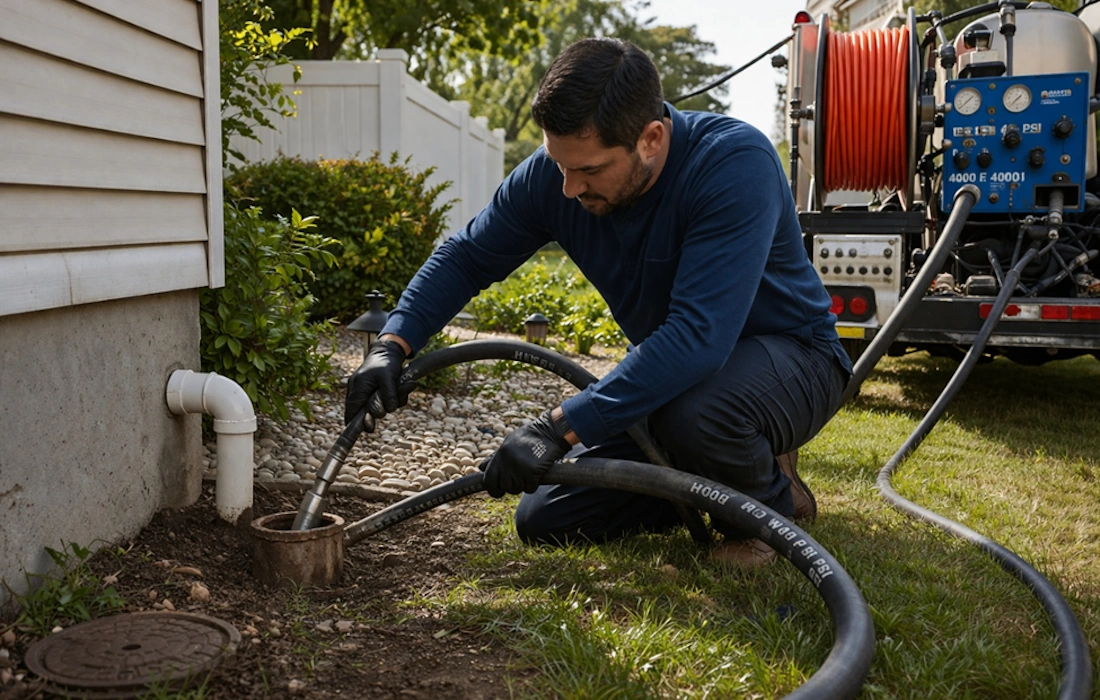
Commercial drains often carry higher volume and different material than residential drains. Kitchen lines may accumulate grease, food material, soap, and sediment. Restroom lines may be affected by paper products, foreign objects, scale, fixture problems, roots, offsets, deteriorated piping, or a larger main-line restriction. Floor drains can dry out, smell, clog, or become the first visible point of a downstream backup.
A basic cable may restore flow in some cases. Hydro jetting may be considered when pipe condition allows and heavy buildup or recurring blockage warrants a more thorough cleaning approach. Camera inspection can help document location, roots, damage, offsets, or conditions that cleaning alone cannot correct. Sewer-line cleaning, sewer maintenance, and sewer repair or replacement planning remain separate paths
because the right response depends on the line.
When several drains slow together, wastewater rises in a lower fixture, or a toilet bubbles while another fixture drains, stop water use and report the pattern. Continuing to run dishwashers, sinks, laundry, or toilets can feed the backup. A commercial backup is not improved by optimism, although businesses continue to test that theory daily.
Commercial Hot Water
Water-heater service must account for demand, recovery, fuel, venting, circulation, and the cost of downtime
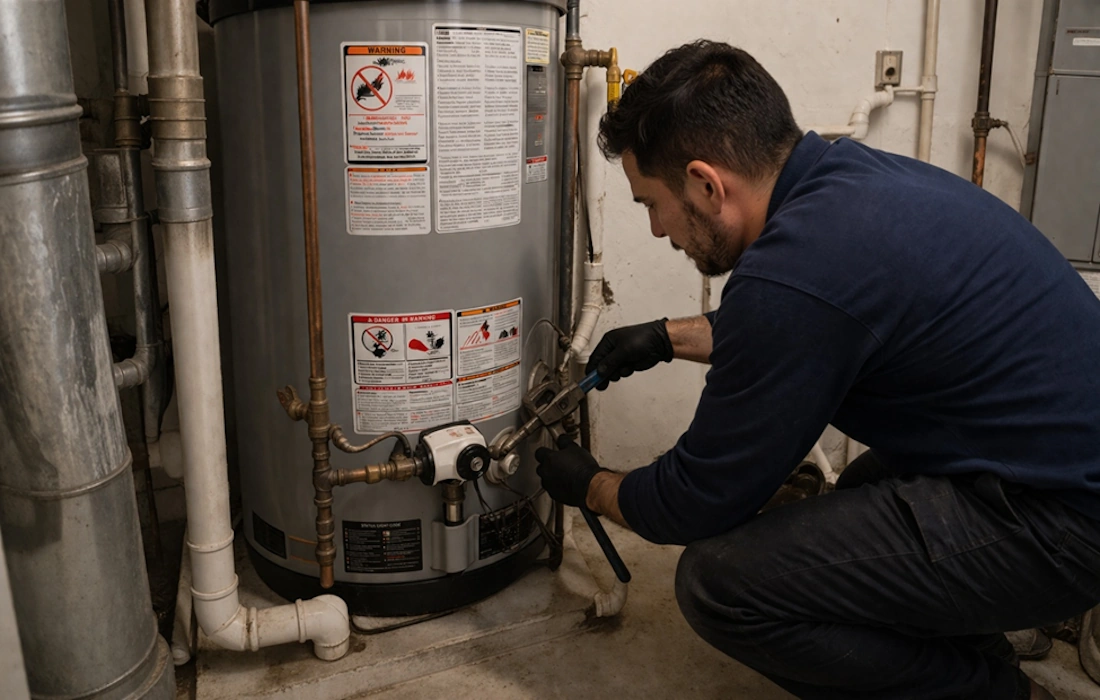
Commercial hot-water trouble can present as no hot water, insufficient recovery, unstable temperature, long waits at distant fixtures, leaking equipment, error codes, ignition problems, scale,
recirculation issues, or a system that no longer matches the property’s demand.
Repair and diagnosis
Diagnosis may include the tank or tankless unit, fuel or electrical supply, controls, sensors, burners, elements, valves, venting, drainage, recirculation, mixing components, pressure and temperature conditions, error history, and the actual use pattern. A repair recommendation should identify the failed component and whether the system remains suitable for the building.
Replacement and sizing
Commercial replacement planning considers peak demand, recovery, simultaneous fixture use, storage,
incoming water temperature, fuel, electrical capacity, venting, gas supply, drainage, equipment
location, access, redundancy needs, and whether work must be phased to protect operations. The largest available unit is not automatically the correct unit.
Tankless and multi-unit decisions
Tankless systems can save space and provide continuous output within their capacity, but commercial
demand, gas or electrical requirements, venting, water quality, maintenance, controls, redundancy, and service access must be r different design rather than one oversized promise.
Use Manzo’s water-heater services hub, water-heater repair page, installation guide, and tankless water-heater page for deeper system
information. The commercial hub explains how those services affect business continuity and property management.
Leaks, Piping, Water Lines & Gas Lines
A commercial leak may be a fixture problem, a branch-line failure, a building distribution issue, or a service-line concern
Hidden and visible leaks
Stains, warped materials, ceiling moisture, damp walls, unexplained meter use, low pressure, recurring puddles, mold odor, or water appearing far from a fixture may need leak detection. The goal is to locate the source and minimize unnecessary opening where practical.
Pipe repair and repiping
Corrosion, repeated pinholes, poor prior repairs, incompatible materials, chronic pressure problems, or widespread deterioration may require more than one patch. Manzo’s piping and repiping page explains partial and whole-system planning.
Water-line service
Building-wide pressure loss, discolored water, wet areas near the service route, meter movement, utility findings, or repeated underground trouble may point toward the main water service or distribution. Review water-line repair and replacement.
Gas piping
Manzo provides confirmed gas-line repair and piping service within company scope. Gas odor, hissing, fire, or suspected active leakage requires evacuation and utility or emergency contact first. Routine scheduling begins only after the immediate hazard is addressed. Review gas-line service.
For commercial buildings, shutoff planning matters almost as much as the repair. The technician may need to determine whether one fixture, one suite, one riser, one zone, or the entire building must be isolated. Existing valves may be unmarked, inaccessible, seized, or unreliable. Property managers should maintain accurate shutoff information and avoid waiting until water is crossing a finished ceiling to discover that the only working valve serves every tenant.
Commercial Plumbing Maintenance
Preventive work should target the failures that would actually interrupt the property
Commercial preventive maintenance is not a generic checklist performed for appearances. It begins with the building’s service history, fixture count, drain patterns, water-heater demand, tenant complaints, known vulnerable piping, seasonal exposure, shutoff locations, prior emergencies, and the business consequence of each failure.
A practical review may identify slow drains before they back up, toilets that run between uses, sensor fixtures with recurring battery or solenoid trouble, corroded supplies and stops, water-heater leakage or recovery decline, missing labels on shutoffs, recurring pressure complaints, deteriorated traps, vulnerable exterior or unheated piping, and repairs that have become a pattern. Those findings can be prioritized by urgency and operating impact.
Manzo can provide service and maintenance planning within confirmed capability. The page does not promise a formal agreement, guaranteed response time, regulatory inspection, certified backflow testing, grease-trap pumping, fire-sprinkler service, medical gas, process piping, or industrial work unless the company separately verifies and approves that service. Clear scope protects both the customer and the contractor, an underrated concept in the internet’s ongoing competition to promise everything.
Monthly observation
Facilities staff can note visible leaks, running fixtures, slow drains, odors, water-heater warnings, damaged caulk or seals, pressure changes, unusual sounds, and areas that repeatedly need cleanup. Early reporting gives the plumber a cleaner symptom history.
Seasonal preparation
Review outdoor and vulnerable piping, unheated areas, vacant units, hose connections, loading areas, mechanical-room heat, access to shutoffs, and emergency contacts before cold weather. Use Manzo’s frozen-pipe service for related planning.
Recurring-drain strategy
Track which line clogs, frequency, clearing method, camera findings, material removed, and how long service lasts. Repeated short-term clearing without documentation makes it difficult to distinguish misuse, buildup, roots, poor slope, damage, or an undersized or poorly configured line.
Renovations, Tenant Improvements & Plumbing Projects
Project plumbing succeeds when scope, access, drawings, fixtures, shutdowns, and responsibilities are clear before demolition begins
Commercial renovations can include restroom updates, break rooms, kitchens, tenant build-outs, fixture relocation, rough-ins, water-heater replacement, piping changes, new sinks, equipment connections, drainage changes, and corrections discovered after walls or floors are opened.
Define the plumbing scope
Identify what is staying, moving, being removed, or being added. Confirm fixture schedules, equipment requirements, rough-in locations, water and drain sizes, shutoffs, venting, hot-water needs, gas or electrical coordination, accessibility responsibilities, permits, inspections, and the boundary between plumbing and other trades.
Verify site conditions
Existing drawings may be incomplete or outdated. Field conditions can reveal undocumented piping, inaccessible valves, poor prior work, damaged drains, limited ceiling or wall space, structural
conflicts, slab conditions, or equipment that cannot be removed through the expected path. Verification reduces change-order surprises.
Plan shutdowns and sequencing
Determine which tenants, fixtures, areas, or floors will lose service; when work can occur; how long
systems may be unavailable; who communicates with occupants; what temporary measures are permitted; and which work must be completed before walls, cabinets, counters, floors, or equipment are installed.
Customer-supplied fixtures and equipment should be reviewed before the work date. Model numbers, rough-in diagrams, faucet-hole patterns, mounting requirements, drain locations, power or control needs, supply sizes, clearances, and service access can prevent an expensive object from arriving beautifully packaged and completely incompatible. For kitchen and bathroom rough-in information, use Manzo’s rough-in service page.
Commercial Brands & Equipment
Representative brands help identify the equipment, but the model and condition decide the service path
Manzo can evaluate many common commercial plumbing and water-heating brands. Listing a brand does not promise that every proprietary part, discontinued model, warranty procedure, certified specialty system, or factory-only control is available. Share model numbers and photos when scheduling.
Restroom fixtures & flush valves
Zurn
American Standard
Kohler
TOTO
Gerber
Flushmate
Mansfield
Faucets, sinks & commercial fixtures
T&S Brass
Moen Commercial
Delta Commercial
Symmons
Speakman
Elkay
Kraus
Water heaters, valves & pumps
Bradford White
Rheem
Navien
Rinnai
Noritz
Watts
Zoeller
Commercial Plumbing Cost Factors
A useful commercial price starts with scope, access, risk, downtime, and what the plumber finds
One public flat price cannot accurately cover a leaking lavatory faucet, a restaurant main-line backup, a broken flushometer, a water-heater replacement, a failed building shutoff, piping above a finished ceiling, or work that must occur after close. Commercial cost is shaped by the problem and the operating conditions around it.
Diagnosis and repair scope
Equipment type, failed component, diagnostic time, parts, model-specific controls, piping, drainage, access, testing, prior repairs, corrosion, water or gas shutdowns, cleanup conditions, and whether the active symptom reveals a larger failure.
Access and scheduling
Occupied-hour restrictions, after-hours windows, roof or mechanical-room access, elevators, keys, security, parking, loading, permits, tenant notice, restroom closure, food-service operations, and the number of people or spaces affected.
Replacement and project work
Fixture or equipment selection, removal, rough-in compatibility, piping changes, electrical or gas coordination, venting, drainage, controls, mounting, floor or wall opening, code-related corrections, inspections, other trades, and project sequencing.
Drain and sewer conditions
Location and severity of blockage, cleanout access, pipe size and condition, material in the line, camera inspection, cleaning method, root or damage findings, wastewater exposure, restoration needs, and whether repair is required after flow returns.
The caller should receive a clear explanation of the diagnosed problem and approved scope. Temporary stabilization, focused repair, planned replacement, and larger capital work are different decisions. Review financing options and current offers for qualifying work instead of embedding a promotion in a permanent commercial authority page.
Nassau County & Nearby Western Suffolk
Commercial plumbing coverage centered on Wantagh and the surrounding business market
Manzo serves commercial properties throughout the Wantagh area and nearby Nassau County communities, Hicksville, Plainview, Freeport, Baldwin, Hempstead, Rockville Centre, and Oceanside. Nearby western Suffolk work, including Amityville and Babylon, may be scheduled based on property type, urgency, project scope, routing, and availability.
Commercial service radius can vary because a restaurant backup, multifamily water-heater failure, managed-property leak, or planned piping project has a different operational and travel profile than a minor fixture adjustment. Call with the address, property type, active problem, and scheduling constraints so the office can confirm coverage.
Seaford 11783
Bellmore 11710
Merrick 11566
Massapequa 11758
Massapequa Park 11762
Levittown 11756
East Meadow 11554
Bethpage 11714
Farmingdale 11735
Hicksville 11801
Plainview 11803
Freeport 11520
Baldwin 11510
Hempstead 11550
Rockville Centre 11570
Oceanside 11572
Amityville 11701
Babylon 11702
Commercial Service Process
The fastest route to a useful visit is an accurate first report
Report the operational impact
Give the address, business or property type, suite or unit, active leak or backup status, fixtures and areas affected, occupancy, service window, on-site contact, and whether a shutoff or cleanout is known.
Prepare access and records
Arrange keys, security, roof or mechanical-room access, tenant communication, parking, equipment model information, prior invoices, camera reports, photos, and the person authorized to approve work.
Diagnose the complete system
The technician evaluates the active symptom, connected fixtures, supply, drainage, controls, piping, pressure, hot-water or sewer conditions, and operating pattern before recommending repair or replacement.
Approve, complete, and test
Approved work is completed within the defined scope. The affected fixture or system is operated and tested, limitations are explained, and any recommended next step is separated from the immediate repair.
Commercial scheduling checklist
- Exact address, suite, floor, unit, and entrance
- Property and business type
- On-site contact and decision maker
- Vendor paperwork and insurance requirements
- Active leak, sewage, gas odor, or no-water status
- Fixtures, zones, tenants, or floors affected
- Model and serial numbers where available
- Prior repair and recurring-problem history
- Operating hours and allowed work window
- Shutoff, cleanout, roof, and mechanical access
- Parking, loading, elevator, and security rules
- Photos or video that show the symptom
Commercial Plumbing Resource Network
Direct paths into the service the property actually needs
Long Island Commercial Trust
One local company connecting plumbing, drains, water heaters, heating, and emergency
response
Commercial properties often need more than one narrow service. A restroom backup may involve the fixture, branch drain, main sewer, or recurring line condition. A no-hot-water call may involve the heater, controls, fuel, piping, circulation, or demand. Manzo’s broad service structure gives businesses and property managers a direct path into the related repair instead of leaving them to coordinate several disconnected pages and contractors.
Commercial Plumbing FAQs
Questions Long Island business owners and property managers ask
Do you provide emergency commercial plumbing?
Yes. Call for active leaks, burst pipes, sewage backups, overflowing fixtures, sudden water loss, no hot water, or failures that threaten property or operations. Gas odors, fire, smoke, electrical danger, or structural concerns require emergency services or the utility first.
Can you work around business hours and occupied properties?
Scheduling may be planned around operating hours, tenants, customers, access, and available service windows. Provide the allowed work period, occupied areas, shutdown restrictions, security requirements, on-site contact, and who can approve work when scheduling.
Do you repair commercial toilets, urinals, and flushometers?
Yes. Service may include manual and sensor flushometers, diaphragms, pistons, handles, solenoids, batteries, control stops, vacuum breakers, wall-hung or floor-mounted fixtures, leaks, continuous flow, weak flushes, clogs, and replacement planning.
Do you repair commercial faucets, sinks, and restroom fixtures?
Yes. Manzo can
evaluate commercial faucets, sensor and metering controls, sinks, lavatories, supply lines, shutoffs, traps, drain connections, leaks, low flow, temperature concerns, mounting, and replacement options. Accessibility depends on the entire room and route, not one fixture alone.
Can you help with restaurant and commercial-kitchen plumbing?
Yes, within confirmed
plumbing scope. Calls may involve prep and hand sinks, faucets, drains, floor drains, garbage disposals,
water heaters, supply lines, shutoffs, restroom fixtures, leaks, and recurring clogs. Share whether
food-service operations are active and which work area is affected.
Do you provide commercial drain cleaning and hydro jetting?
Manzo provides drain and sewer service, including cleaning, camera inspection, and hydro jetting when appropriate for the line and condition. A camera may be recommended when clogs recur, roots or damage are suspected, or previous cleaning did not last.
Do you service commercial water heaters and tankless systems?
Yes. Commercial hot-water service may include diagnosis, repair, replacement planning, tank and tankless systems, recovery problems, leaking equipment, error codes, venting, controls, recirculation concerns, and evaluating whether the system matches demand.
Do you handle commercial pipe, water-line, and gas-line work?
Manzo provides confirmed pipe repair, piping and repiping, water-line, and gas-line services within company scope. The exact service depends on the property, system, access, permit or qualification requirements, and the active condition. Gas odors require immediate evacuation and utility or emergency contact.
Can you provide commercial plumbing maintenance?
Manzo can help inspect and address recurring drain, fixture, leak, valve, water-heater, seasonal, and piping concerns within confirmed capability. The page does not promise formal maintenance agreements or regulated testing services unless the company separately verifies and approves them.
Do you provide certified backflow testing, grease-trap pumping, fire-sprinkler, medical-gas, or industrial process-piping service?
Those specialized systems may require separate certification, equipment, licensing, disposal procedures, engineering, or trade scope. Call with the exact system and Manzo can confirm whether the work is within current capability or requires another qualified provider.
How much does commercial plumbing cost on Long Island?
Cost depends on the failure, diagnostic time, parts, piping, access, occupied-hour restrictions, shutdowns, equipment, fixture type, drain or sewer condition, permits, project coordination, and whether the immediate problem reveals a larger repair. A reliable price follows diagnosis and a defined scope.
What should a property manager provide before the visit?
Provide the address, unit or suite, property type, active symptoms, affected areas, access contacts, vendor requirements, approval procedures, service history, photos, model numbers, shutoff or cleanout information, operating hours, and tenant communication needs.
Can Manzo coordinate service for multiple commercial properties?
Property managers and business owners can provide the addresses, property types, active problems, access contacts, approval procedures, operating hours, and service history for each location. The office can then confirm coverage, urgency, routing, and whether the work should be handled as separate visits or a planned service sequence.
Commercial Plumbing Long Island
Protect the property, restore service, and get a clear next step
Call Sal Manzo Plumbing, Heating & Cooling for commercial plumbing across Nassau County and nearby western Suffolk. Share the property type, address, active symptom, operating impact, access requirements, and service window so the team can route the call correctly.