Long Island Heating Repair
Complete Heating Repair for Long Island Homes
When the heat stops, homeowners need a clear answer quickly. Sal Manzo Plumbing, Heating & Cooling repairs boilers, furnaces, heat pumps, radiators, baseboard heat, hydronic systems and the plumbing problems that sometimes come with a heating failure.
A no-heat call can begin with an ignition part, thermostat, circulator, zone control, airflow restriction, pressure problem or aging equipment. It can also create a second emergency when indoor temperatures fall enough to threaten water lines. The goal is to identify the actual failure, explain the options and restore dependable heat without treating every service call like an automatic replacement.
One Company, Clear Direction
Who should you call when you are not sure whether the problem is heating, hot water or plumbing?
Homeowners are not expected to diagnose a boiler loop, furnace control board or indirect water heater from the basement doorway. A house can lose heat for several reasons, and the symptom does not always identify the trade needed. A boiler problem may involve burners, water pressure, circulators, zone valves, radiators or piping. A furnace may involve combustion, airflow, venting or controls. A heat pump combines refrigeration, electrical and airflow components.
The overlap becomes more important when the home has no heat and no hot water, when a boiler is leaking, when radiators are cold or when falling indoor temperatures place plumbing at risk. Sal Manzo handles boilers, furnaces, heat pumps, water heaters and related plumbing service. That gives the homeowner one place to begin instead of making three calls and hoping one contractor accepts the problem.
Start with the symptom, not a guess
- No heat in the entire home: boiler, furnace, heat pump, controls or fuel supply may be involved.
- Only one cold zone: thermostat, zone valve, circulator, damper or airflow may be involved.
- No hot water only: start with the water-heating system.
- No heat and no hot water: the systems may share equipment or controls.
- Water near a boiler: arrange prompt heating and leak service.
- Indoor temperature falling fast: protect pipes and call for service.
Emergency Heating Help
No heat is not a “wait and see” problem during a Long Island cold spell.
A complete loss of heat can affect comfort, safety, plumbing and the time available to make a reasonable repair decision.
Call promptly when
- The system will not start
- Indoor temperatures keep dropping
- The boiler is leaking or losing pressure
- The furnace repeatedly shuts down
- The heat pump is frozen or will not switch modes
Protect the home
- Keep interior doors open so warmer air can move
- Protect vulnerable plumbing in cold areas
- Do not use unsafe heating substitutes
- Keep combustibles away from temporary heaters
- Follow manufacturer and emergency instructions
Leave and call emergency services if
- You smell gas
- You see smoke or active fire
- A carbon-monoxide alarm sounds
- Anyone feels dizzy, weak, nauseated or confused
- Wet equipment creates an electrical hazard
Complete Residential Heating Service
Heating systems Sal Manzo repairs across Long Island
Homeowners need to recognize the system they own, the warning signs they see and the next useful service.
Boilers and hydronic heat
Boiler service may involve burners, ignition, pressure, controls, circulators, zone valves, radiators, baseboard loops and related piping. Common symptoms include no heat, cold zones, leaks, low pressure, banging sounds and repeated resets.
Furnaces and forced air
Furnace repair may involve ignition, burners, flame sensors, blower motors, filters, duct airflow, thermostats, electrical controls, venting and safety switches. Weak airflow or cool air can have several causes.
Heat pumps and ductless systems
Heat-pump repair covers equipment that will not heat, runs constantly, freezes outdoors, short cycles, makes unusual noises or leaves rooms uneven. Diagnosis may involve airflow, coils, refrigerant performance, electrical controls and thermostat settings.
Radiators, baseboard and zones
Hydronic distribution problems can leave one room cold while the boiler appears to run normally. Service may involve trapped air, circulators, zone valves, thermostats, piping, radiators, baseboard sections or system pressure.
Real Manzo Heating Work
Real Manzo technicians and real Long Island heating jobs help homeowners see the people and equipment behind the service.
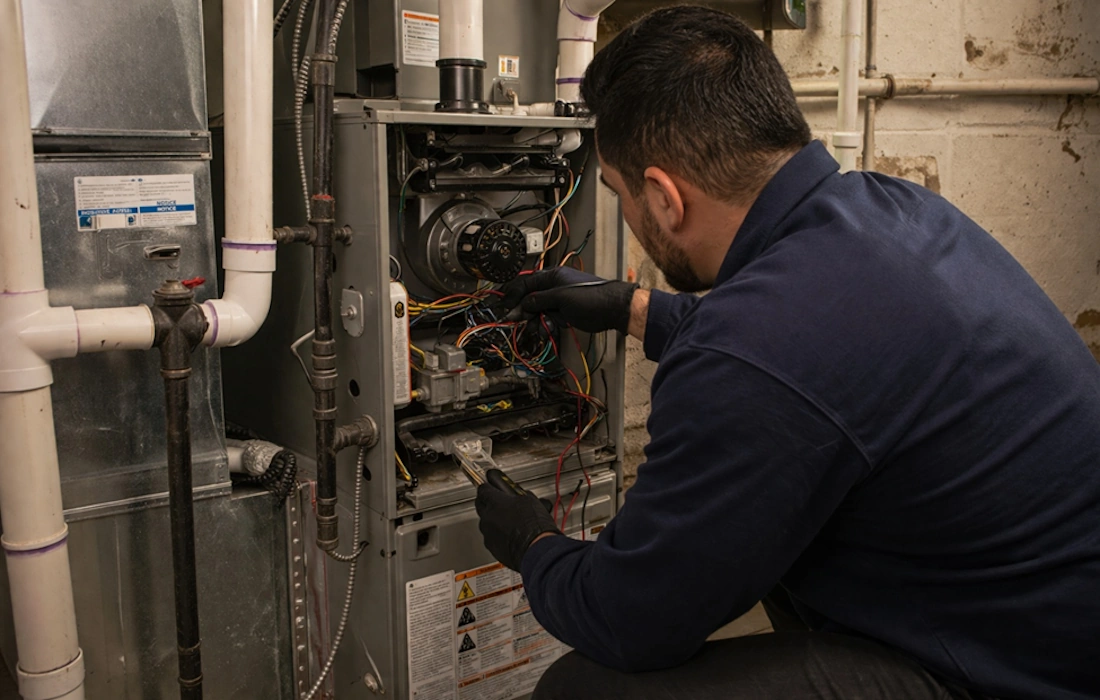
Boiler or hydronic heating job
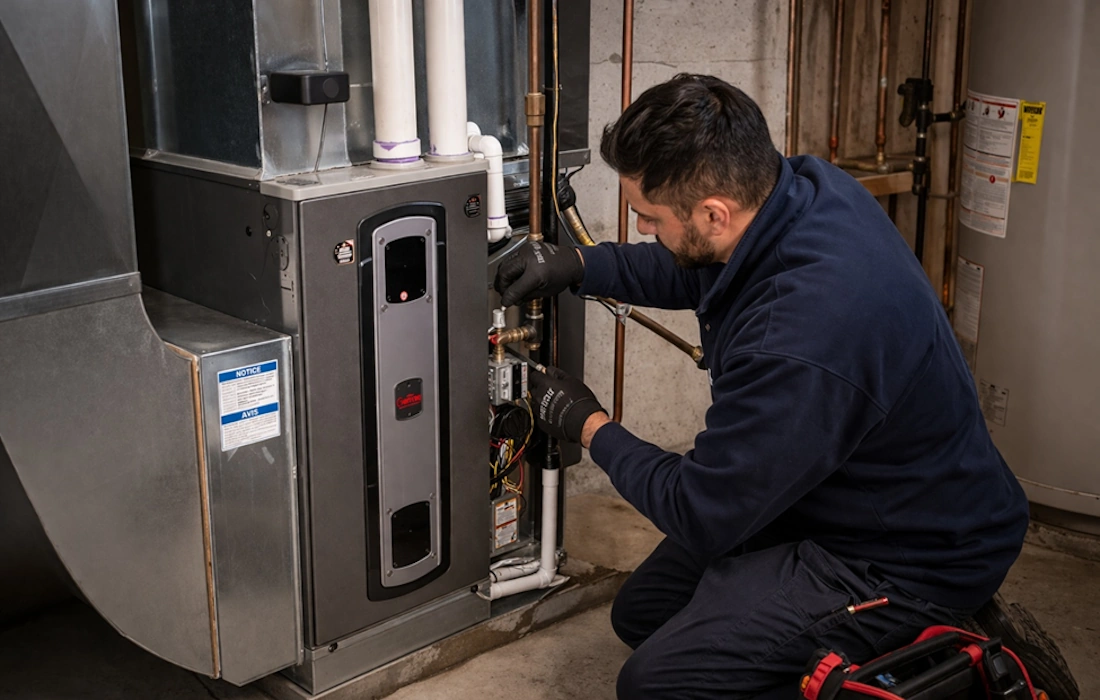
Furnace or heat-pump job
Ready for a Clear Answer?
No heat, weak heat or a system that will not stay running?
Call Sal Manzo Plumbing, Heating & Cooling. Describe the symptom, the equipment and whether you also lost hot water or found a leak.
A Major Long Island Heating Service
Boiler repair requires heating and plumbing knowledge to work together.
Boilers are common in Long Island homes, and they do more than create heat inside one metal cabinet. A boiler system can include water pressure, pumps, zone controls, valves, piping, radiators, baseboard loops, venting and fuel components. A symptom in one room may begin somewhere else in the system.
A boiler that fires but does not warm the home may have a circulation or zoning problem. A boiler that loses pressure may have a leak, expansion problem or failing component. Banging or knocking may involve trapped air, flow, pressure, temperature or the distribution system. Water around the unit may require both heating diagnosis and leak repair.
Boiler problems Manzo can diagnose
- No heat or weak heat
- Cold radiators or baseboards
- Low or changing pressure
- Leaks near the boiler
- Banging, whistling or rattling
- Ignition or burner trouble
- Failed circulator or zone
- Frequent resets or shutdowns
- Uneven temperatures
- No heat and no hot water
Repair or replacement?
Repair is often reasonable when the problem is isolated and the system remains safe and dependable. Replacement deserves discussion when breakdowns repeat, major parts are failing, efficiency has declined or the system cannot heat the home evenly.
Forced-Air Heating
Furnace repair should address combustion, controls and airflow.
A furnace can stop producing heat, blow cool air, short cycle, run constantly or leave distant rooms uncomfortable. Some problems begin at the thermostat or ignition system. Others involve the blower, filter, ductwork, burners, flame sensor, venting or safety controls.
Weak heat is not always a failed furnace. Restricted airflow, a clogged filter, duct leakage or a control problem can create similar symptoms. A proper diagnosis checks how the equipment starts, runs, moves air and shuts down before a recommendation is made.
Visit the Long Island furnace repair and installation page for system-specific information, or call if the furnace will not start, repeatedly shuts off, makes unusual noises or produces a burning odor.
Common furnace warning signs
- Furnace will not turn on
- Cool or weak air from vents
- Short cycling or constant operation
- Uneven room temperatures
- Blower, ignition or thermostat trouble
- Rattling, buzzing or grinding sounds
- Unusual burning smells
- Rising energy use with worse comfort
Heating and Cooling in One System
Heat-pump repair begins with performance, airflow and controls.
A heat pump may run but fail to warm the home, blow cool air in heating mode, freeze outdoors, short cycle or operate constantly. The cause may involve thermostat settings, airflow, dirty coils, electrical controls, outdoor conditions, refrigerant performance or equipment that is no longer matched to the home.
Because heat pumps serve both heating and cooling, a useful diagnosis looks at the whole operating cycle rather than one symptom. Manzo’s existing heat-pump repair and installation hub provides deeper guidance about ducted, ductless and replacement options.
Call for heat-pump help when
- The system runs but does not heat
- Airflow is weak or uneven
- The outdoor unit is covered in ice
- The system short cycles
- Rooms never reach the set temperature
- The thermostat reads incorrectly
- The equipment makes new noises
- Electric use rises sharply
When repairs become frequent or the system cannot maintain comfort, replacement planning may make more sense than paying for one temporary fix after another. The decision should consider age, reliability, home layout, electrical capacity, efficiency goals and the cost of the needed repair.
Useful Plumbing Connections, Not Keyword Stuffing
Heating problems that naturally connect to plumbing service
These connections answer real homeowner problems where heating and plumbing meet, including boiler leaks, frozen pipes, gas-line concerns and the loss of both heat and hot water.
No heat and no hot water
A boiler, indirect water heater or shared control can affect both. Separate systems may fail at the same time for different reasons. Manzo can diagnose the heating side and the water-heating side.
Boiler or radiator leaks
Leaks can lower pressure, damage nearby materials and prevent proper circulation. Prompt leak detection and repair helps address the water source and the heating symptom.
Frozen-pipe risk
A long loss of heat can expose plumbing in exterior walls, basements and other cold areas. If pipes freeze or burst, call for frozen-pipe service.
Gas-line concerns
Some boilers and furnaces rely on gas. Do not attempt to diagnose a gas odor. Leave the area, follow emergency instructions and use Manzo’s gas-line service for appropriate non-emergency repairs.
Do Not Ignore the Pattern
Most heating breakdowns give the homeowner a warning first.
Comfort changes
- Some rooms stay cold
- The system takes longer to recover
- Heat fades before the thermostat is satisfied
- Radiators or vents feel weaker than before
New sounds or operation
- Banging, rattling or whistling
- Frequent starts and stops
- Constant running
- Repeated resets or lockouts
Leaks, odors and safety concerns
- Water near a boiler or radiator
- Burning or electrical odors
- Gas odor or smoke
- Carbon-monoxide alarm
The Symptom Is Only the Starting Point
Different heating failures can feel exactly the same inside the house.
“The house is cold” describes the result, not the cause. A useful service visit separates equipment trouble from circulation, airflow, control and plumbing problems before anyone starts replacing parts.
Thermostats, zones and controls
A thermostat can display the correct temperature and still fail to communicate properly with the equipment. Zone valves, relays, sensors, dampers and control boards can also prevent one part of the home from receiving heat.
Clues include a system that will not start, one cold zone, equipment that keeps cycling or a thermostat setting that never matches the room. Testing the control sequence helps determine whether the heating equipment itself has failed or whether it is simply not receiving the right command.
Circulation, radiators and baseboard
A boiler can run while heat fails to move through the home. Air in the system, a failed circulator, closed or stuck valves, pressure trouble, blocked flow or a zone-control problem can leave radiators and baseboards cold.
Homeowners may notice gurgling, knocking, one warm floor and one cold floor, a radiator that never heats or a boiler that repeatedly reaches temperature without warming the rooms. These symptoms require attention to the entire hydronic loop, not just the boiler cabinet.
Airflow, ignition and safety
Furnaces and heat pumps depend on proper airflow as well as working equipment. Dirty filters, blower trouble, blocked returns, duct problems, frozen coils, failed ignition components or safety controls can reduce or stop heat.
Weak airflow, cool air from vents, burning odors, constant running or repeated shutdowns should be inspected. A technician can determine whether the problem is maintenance, a failed component, an airflow restriction or an unsafe condition that requires the system to remain off.
Why this matters for the homeowner
Replacing the first suspicious part does not help when the actual failure is elsewhere in the system. A repair-first approach follows the operating sequence, checks the equipment under real conditions and explains the evidence behind the recommendation. That protects the homeowner from unnecessary work while also identifying situations where an aging system has several connected problems rather than one simple failure.
Before the Technician Arrives
Simple information can help the service call start faster.
Homeowners should not take equipment apart or bypass safety controls. They can, however, gather a few details that help the technician understand the failure. Note whether the problem affects the entire home or one zone, whether hot water is also gone and whether the equipment makes a sound when the thermostat calls for heat.
Look for the system type and, when safely visible, the brand or model information. Explain when the problem began, whether it has happened before and whether anyone reset the equipment. Mention leaks, unusual odors, recent plumbing work, power interruptions or thermostat changes.
If the system begins operating again before the appointment, do not assume the problem disappeared. Intermittent failures often return during colder weather. The pattern, timing and sounds may help identify a control, ignition, circulation or airflow problem that is difficult to reproduce after the house warms up.
Helpful details to share
- Boiler, furnace, heat pump or unknown system
- No heat everywhere or only in certain rooms
- Whether the home also lost hot water
- Leaks, pressure changes or frozen piping
- Noises, odors, warning lights or error codes
- Recent resets, repairs or thermostat changes
- Approximate age of the equipment
- Whether the problem is constant or intermittent
Do not continue operating equipment when there is smoke, a gas odor, active flooding, wet electrical components or a carbon-monoxide alarm.
Preventing the Next Cold-House Emergency
Heating maintenance supports reliability, but it cannot erase every failure.
Routine service helps identify wear, control problems, leaks, airflow restrictions and operating concerns before the coldest part of the year. It also gives homeowners time to plan instead of making a replacement decision during an emergency.
Boiler and hydronic checks
Boiler service may include review of pressure, visible leaks, controls, circulation, venting, combustion, burner operation and heat distribution. Radiators, baseboard loops and zones should respond as expected.
Furnace and airflow checks
Furnace service may include filters, burners, ignition, flame sensing, blower operation, thermostat response, venting, electrical controls and airflow. Safety concerns should be corrected before the heating season places the system under heavier demand.
Heat-pump performance checks
Heat-pump maintenance may include coils, drainage, filters, airflow, thermostat settings, electrical components, outdoor-unit condition and overall heating performance. Small performance losses can become more obvious as outdoor temperatures fall.
Clear Answers Before Parts Are Replaced
Manzo’s heating-repair process
Listen and inspect
The visit begins with the symptoms, equipment history and what changed before the failure. The technician inspects the system and related controls.
Diagnose the cause
Testing focuses on the actual reason the heat is not working, including ignition, circulation, airflow, pressure, controls or related plumbing.
Explain the options
The homeowner receives a plain-language explanation of what failed, what can be repaired and whether age or safety creates a larger concern.
Repair and test
Approved work is completed, the equipment is tested and system operation is reviewed before the service is finished.
Pricing Depends on the Failure
What affects the cost of heating repair?
There is no honest single price for “heating repair” because that phrase covers multiple systems and hundreds of possible failures. A thermostat, ignitor or zone-control problem is not priced like a failed circulator, blower motor, major boiler component or system replacement.
Cost can depend on the equipment type, part, labor, access, urgency, parts availability, system age and whether plumbing, venting, electrical or safety work is also needed. An on-site diagnosis allows the technician to explain the problem and provide a useful estimate rather than advertising a number that applies to almost nobody.
- Boiler, furnace, heat pump or hydronic system
- Minor control failure or major component
- Standard appointment or urgent response
- Equipment access and system condition
- Part availability and age of the unit
- Related leak, piping or safety problem
Repair vs. Replacement
Repair usually makes sense when
- The system is generally reliable
- The failure is isolated and repairable
- Safety and efficiency remain acceptable
- The cost is reasonable for the system’s age
Replacement deserves consideration when
- Breakdowns and service calls keep repeating
- Major parts are expensive or unavailable
- The system is unsafe or badly deteriorated
- Heating bills rise while comfort declines
- The equipment cannot heat the home evenly
Limited-Time Heating Repair Offer
Heating Repair Service
Use this offer for qualifying boiler, furnace, thermostat, no-heat and related heating-repair service.
Mention the coupon when scheduling. Cannot be combined with other offers. Confirm current terms and expiration before publishing.
Local Trust That Helps a Homeowner Decide
Why Long Island homeowners call Sal Manzo
- More than 1,000 Google reviews
- 4.9 average rating displayed on the site
- Serving Long Island since 1986
- Plumbing, heating and cooling under one company
- Emergency service availability
- Nassau County and nearby Suffolk County service
- Repair, maintenance, installation and replacement support

Nassau County and Nearby Suffolk County
Long Island heating-repair service areas
Sal Manzo provides heating service from Wantagh across priority Nassau County communities and nearby parts of Suffolk County. Local pages in the 30-page project will focus on heating and boiler needs in the ten cities below. Each future city link should be added only after that page is published and tested, avoiding broken placeholder links.
Verified Home-Heating Resources
Safety and efficiency information from established organizations
ENERGY STAR heating and cooling
General information about heating and cooling efficiency, maintenance and equipment choices.
NFPA heating safety
Home-heating fire safety guidance, including equipment clearance and safe seasonal use.
CPSC carbon-monoxide safety
Official consumer guidance about carbon-monoxide alarms, warning signs and emergency action.
Heating Repair FAQs
Questions Long Island homeowners ask before scheduling service
Who should I call when my heat stops working on Long Island?
Call a company that works with the type of heating system in your home and can also identify related plumbing problems. Sal Manzo Plumbing, Heating & Cooling services boilers, furnaces, heat pumps, radiators, baseboard heat, hydronic systems, thermostats, zone controls and related piping. That broad experience matters when a homeowner is not sure whether the trouble is coming from the heating equipment, the hot-water system or the plumbing connected to it.
Do you provide emergency heating repair?
Emergency heating service is available for urgent problems such as no heat, a boiler that will not fire, furnace failure, a leaking heating system or equipment that stops operating during cold weather. Availability and arrival time depend on location, call volume and the type of problem. Call (516) 783-0490 and describe what the system is doing so the team can determine the next step.
Do you repair boilers and furnaces?
Yes. Sal Manzo repairs common residential boiler and furnace problems, including no heat, weak heat, ignition trouble, thermostat issues, short cycling, unusual noises, uneven room temperatures, circulation problems and related safety controls. The technician first identifies what failed before recommending a repair or replacement.
Do you repair heat pumps?
Yes. Heat-pump service may include troubleshooting poor heating, weak airflow, frozen outdoor equipment, thermostat problems, electrical controls, short cycling, constant running, unusual noises and uneven temperatures. Manzo also provides heat-pump installation and replacement guidance for homeowners comparing repair with a new system.
Why is my boiler running but my house is still cold?
Possible causes include poor circulation, air trapped in the system, low pressure, a failed circulator, zone-control trouble, thermostat problems, burner or ignition trouble, blocked radiators or a boiler that cannot keep up with the home. Because several parts can create the same symptom, the safest approach is to test the system before replacing components.
Why do I have no heat and no hot water?
Some homes have separate heating and water-heating equipment. Others use a boiler or indirect water-heating system that can affect both heat and hot water. The problem may involve the boiler, water heater, controls, fuel supply, circulator, piping or another component. A company that handles plumbing and heating can determine which system needs service without sending the homeowner between two contractors.
Can a heating failure cause frozen pipes?
Yes. When indoor temperatures fall, water lines in exterior walls, basements, crawlspaces, garages and other cold areas can freeze. Restoring heat quickly and protecting exposed plumbing can reduce the chance of a burst pipe and water damage. If a pipe has already frozen or split, shut off the water when it is safe and call for plumbing help.
Is a leaking boiler an emergency?
A boiler leak should be inspected promptly. Water near electrical components, rapidly falling pressure, active flooding, unusual odors, smoke or a carbon-monoxide alarm require immediate safety action. Do not touch wet electrical equipment. Leave the home and contact the proper emergency service if you smell gas, see smoke or suspect carbon monoxide.
Should I repair or replace my heating system?
Repair often makes sense when the equipment is generally reliable, the problem is isolated and the cost is reasonable. Replacement deserves consideration when the system is old, unsafe, inefficient, frequently failing, difficult to repair or unable to heat the home evenly. The decision should be based on the condition of the whole system rather than one sales pitch.
How much does heating repair cost?
Heating-repair cost depends on the type of system, the failed component, labor, access, urgency, parts availability, equipment age and whether related plumbing or control problems are involved. A thermostat problem is very different from a failed boiler circulator, heat exchanger or major control. An accurate estimate requires diagnosis.
Do you repair radiators and baseboard heating?
Yes. Sal Manzo works with common Long Island hydronic heating systems, including radiators, hot-water baseboard, circulators, zone valves, thermostats and related piping. Problems may show up as cold rooms, noisy pipes, leaks, air in the system or heat that reaches one zone but not another.
What areas of Long Island do you serve?
Sal Manzo Plumbing, Heating & Cooling serves homeowners across Nassau County and nearby Suffolk County communities. Priority local pages in this heating project include Wantagh, Seaford, Bellmore, Merrick, Massapequa, Levittown, East Meadow, Hicksville, Plainview and Farmingdale.
Final Call to Action
No heat? Strange noises? A system that will not keep up?
Call Sal Manzo Plumbing, Heating & Cooling for boiler, furnace, heat-pump, radiator, hydronic and related plumbing help across Long Island.