
Mini Split Specialists in Nassau & Suffolk
Heat and cool the rooms your main system never handles correctly
A ductless mini split can solve a specific comfort problem without opening ceilings and walls for a full duct system. Sal Manzo Plumbing, Heating & Cooling installs, replaces, repairs and maintains ductless heat-pump systems for Long Island homes, additions and light commercial spaces.
The right system may be one wall-mounted indoor unit for a bedroom or finished attic, several indoor heads connected to a multi-zone outdoor unit, or a cold-climate ductless heat pump that supports year-round heating and cooling. The design should follow the home, not a brochure.
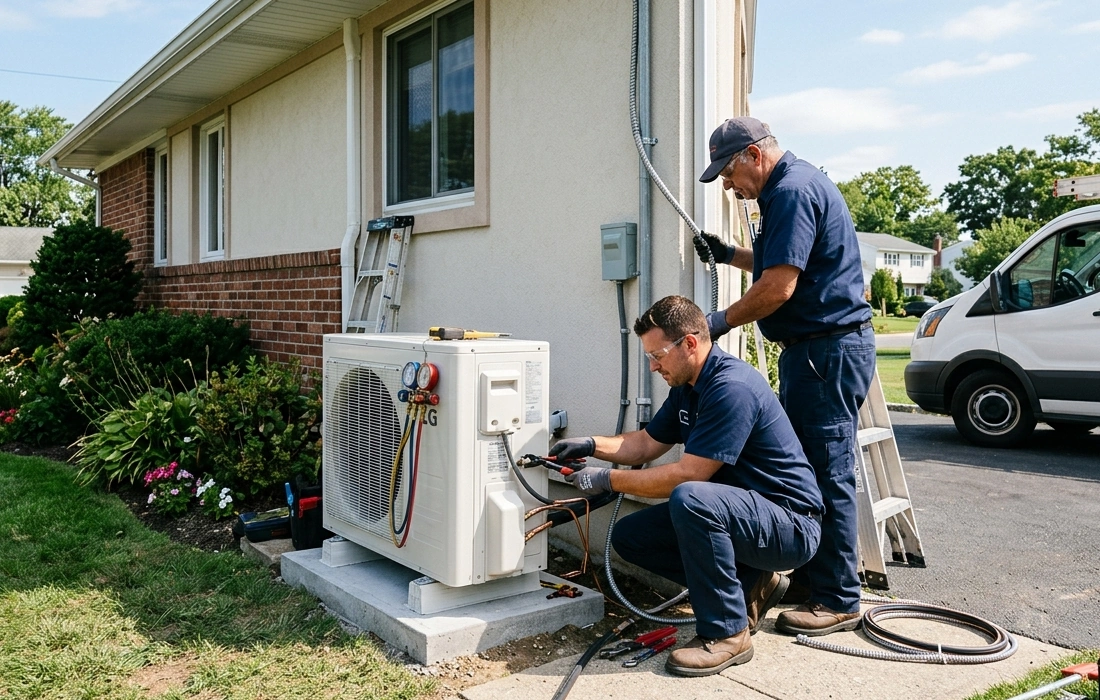
Installation, Repair, Replacement & Care
Complete ductless mini split service
Mini Split Installation
Single-zone and multi-zone design, load planning, indoor-head placement, outdoor-unit location, electrical review and clean line-set routing.
Replacement & Upgrades
Replace older, noisy or inefficient ductless equipment and compare modern inverter, cold-climate and multi-zone options.
Mini Split Repair
Help for no cooling, weak heat, leaks, ice, error codes, poor airflow, communication faults, drain problems and unusual noise.
Maintenance & Cleaning
Filters, coils, drains, indoor heads, outdoor equipment and operating checks to protect efficiency and reduce breakdown risk.
Where Ductless Works Best
A practical answer for older Long Island homes and stubborn rooms
Long Island housing is not famous for being designed around modern HVAC. Cape Cods, ranches, split-levels, finished basements and additions often have rooms the original system never served well.
- Older homes with no usable ductwork
- Hot upstairs bedrooms and finished attics
- New additions and enclosed porches
- Basements, garages and workshops
- Nurseries, guest rooms and home offices
- Small storefronts and treatment rooms
- Rooms far from the main thermostat
- Spaces currently using window units
Single-Zone or Multi-Zone?
Match the equipment to the actual problem
Single-zone: One outdoor unit and one indoor head for one room or open area.
Multi-zone: One outdoor unit serving several indoor heads with separate temperature control.
Several single-zone systems: Sometimes cleaner for rooms far apart or installations completed in phases.
Mini Split Cost on Long Island
What does ductless mini split installation cost?
A firm price requires seeing the rooms, electrical panel and installation path. For planning purposes, 2026 national data places straightforward professional mini-split installation around $2,000–$5,000, while complex multi-zone projects can reach roughly $18,000. Long Island labor, equipment level, permits, electrical work and line-set routing can move the final quote higher.
| Price factor | What changes the quote | What the homeowner should ask |
|---|---|---|
| Number of zones | Every indoor head adds equipment, piping, drainage, wiring and labor. | Do I need every room on day one? |
| BTU and load | Room size, insulation, windows, sun and ceiling height determine capacity. | Was a real load assessment performed? |
| Line-set route | Long, concealed, second-story or finished-wall runs require more labor and material. | Where will the lines and covers be visible? |
| Electrical work | A dedicated circuit, disconnect, panel space or subpanel may be required. | Is electrical work included in writing? |
| Equipment level | Cold-climate performance, efficiency, controls, head style and warranty affect cost. | What model and efficiency rating am I buying? |
| Permits and mounting | Municipal requirements, pads, brackets and snow-height placement vary by job. | Who handles permits and final testing? |
Interactive Conversion Tool
Ductless comfort and energy-savings planner
This lightweight tool gives homeowners a reasonable planning range and then moves them toward an in-home evaluation. It is intentionally conservative because utility bills, insulation and human thermostat behavior remain stubbornly unwilling to fit into one tidy formula.
Illustrative estimate
This is not a quote, rebate calculation or savings guarantee.
Final savings depend on equipment selection, design, insulation, electric rates, current fuel use and how each zone is operated.
The Manzo Installation Process
Plan first, then install cleanly
Evaluate the home
Review room use, comfort problems, insulation, windows, electrical capacity and existing HVAC.
Design the zones
Choose capacity, indoor-head style, outdoor-unit location and a line-set route that does not scar the house.
Install and commission
Mount, connect, pressure-test, evacuate, start and verify the system according to manufacturer requirements.
Explain and support
Walk through controls, filter care, seasonal operation, warranty registration and futur maintenance.
Mini Split Repair on Long Island
Repair the problem before one room becomes the entire household argument
Ductless systems have several problems that look similar from the thermostat. Proper diagnostics should separate airflow, drainage, refrigerant, electrical and communication issues before parts are recommended.
- Indoor head leaking water
- Not cooling or not heating
- Error code or flashing lights
- Outdoor unit icing excessively
- Weak airflow or dirty blower wheel
- Unusual buzzing, rattling or clicking
- Communication fault between units
- Refrigerant leak at fittings or lines
- Short cycling or constant running
- Bad odor or heavy coil buildup
Repair vs. Replace
Replacement deserves a conversation when:
- The equipment is older and efficiency has fallen.
- Major components keep failing.
- Replacement parts are difficult to obtain.
- The system was poorly sized or laid out.
- A newer cold-climate or multi-zone design solves a larger comfort problem.
A smaller drain, sensor, control, cleaning or connection issue may still be a straightforward repair. Diagnosis comes first.
PSEG Long Island & Efficiency
Ask about current heat-pump rebates before equipment is selected
PSEG Long Island states that rebate eligibility requires a participating contractor and qualifying ENERGY STAR equipment.
Questions the office must confirm
- Is Sal Manzo currently a PSEG Long Island Home Comfort participating contractor?
- Which ductless brands and model lines qualify?
- Does Manzo submit rebate paperwork or only provide documentation?
- Are rebates assigned to Manzo or paid to the homeowner?
- What financing can be paired with a qualifying project?
All Major Mini Split Brands
Installation and repair across leading ductless equipment
Local Service Coverage
Ductless mini split service across Nassau and nearby Suffolk County
Ductless Mini Split FAQs
Questions Long Island homeowners ask before installing ductless
How much does a ductless mini split cost on Long Island?
Cost depends on the number of zones, equipment capacity, efficiency, indoor-head style, line-set length, electrical work, mounting and installation complexity. Broad 2026 national planning data puts straightforward professional installation around $2,000–$5,000 and complex multi-zone work up to roughly $18,000. A Long Island home evaluation is needed for an accurate written quote.
Can one mini split heat and cool an entire house?
Some homes can use a properly designed multi-zone or whole-home ductless system, while others are better served by ducted, hybrid or mixed equipment. Layout, insulation, room separation and winter heating needs matter.
Do mini splits work during Long Island winters?
Cold-climate ductless heat pumps are designed for low-temperature operation, but model selection, sizing and installation are critical. The best answer depends on whether the system is supplemental heat or the primary heating source.
How many indoor heads do I need?
The answer depends on the rooms being conditioned, how open they are to one another, their loads and the comfort goal. One head can serve an open area, but closed bedrooms often need separate zones.
Are mini splits cheaper to run than window air conditioners?
ENERGY STAR notes that certified mini splits use variable-speed technology and avoid duct losses. Actual savings depend on the current equipment, insulation, utility rates, sizing and how zones are used.
Can I install a mini split in an addition, attic or garage?
Often, yes. Ductless is commonly used for additions, finished attics, basements, garages, workshops and other spaces that are difficult to connect to the main duct system.
Why is my indoor mini split leaking water?
Common causes include a clogged or improperly pitched condensate drain, dirty coil, frozen coil, damaged drain pan or pump problem. Turn the system off if water is threatening walls or floors and schedule service.
Do you repair Mitsubishi, Daikin, Fujitsu and other brands?
Manzo services major ductless brands. The office should confirm any brand-specific installation certifications or warranty claims before they are published.
Are PSEG Long Island rebates available for mini splits?
Programs may be available for qualifying heat-pump projects. PSEG Long Island says eligible rebates require qualifying equipment and a participating contractor. Eligibility and program terms must be checked before equipment is ordered.
Should I choose ductless or central air?
Ductless works well for homes without ducts, additions and room-by-room zoning. Central air may be a better fit when good ductwork already exists and whole-home cooling is the main goal. A home evaluation should compare both options.
Ready for Better Comfort?
Plan a mini split around your home, not a generic package
Call Sal Manzo Plumbing, Heating & Cooling for ductless installation, replacement, repair and maintenance across Long Island.