
Boiler Repair • Installation • Maintenance
Complete boiler service for Long Island homes
Long Island boiler service is rarely limited to the metal cabinet in the basement. A complete system can include burners, pressure controls, circulator pumps, zone valves, thermostats, radiators, baseboard loops, venting and water piping. A boiler may fire normally while a circulation problem keeps one floor cold. A small leak can lower pressure and create a second plumbing problem. A loss of heat can place exposed water lines at risk during a cold spell.
Manzo works on the heating equipment and the connected plumbing issues that homeowners often cannot separate on their own. That means one company can begin with the symptom, inspect the full system and explain whether the next step is repair, maintenance, installation or a related plumbing service.
Emergency No-Heat and Boiler Leak Service
A boiler problem can affect heat, hot water, plumbing and the home itself.
Call promptly when the boiler stops heating, loses pressure, leaks, shuts down repeatedly or leaves indoor temperatures falling during cold weather.
Urgent boiler symptoms
- Complete loss of heat
- Active water leak
- Pressure dropping repeatedly
- Burner or ignition failure
- Boiler cycling on and off
Protect the property
- Keep people away from wet electrical equipment
- Protect vulnerable plumbing as temperatures fall
- Do not repeatedly reset a system without diagnosis
- Do not block venting or safety controls
- Use safe temporary heat only as directed
Leave and call emergency services if
- You smell gas
- You see smoke or active fire
- A carbon-monoxide alarm sounds
- Anyone feels dizzy, weak or confused
- Flooding reaches electrical equipment
Repair, Installation, Replacement and Maintenance
Complete boiler services for Long Island homeowners
Boiler repair
Repair may involve ignition, burners, pressure, circulators, zone valves, thermostats, controls, venting, radiators, baseboard heat or related piping. Diagnosis should identify the actual cause before parts are recommended.
Boiler installation
Installation planning should consider fuel type, home size, heat loss, venting, distribution, controls, hot-water needs and the condition of the existing piping. Proper sizing matters more than simply choosing the largest available unit.
Boiler maintenance
Annual service can uncover leaks, pressure trouble, control problems, venting concerns, combustion issues and circulation problems before winter demand increases. Maintenance supports reliability but should never be presented as a guarantee against every failure.
Oil-to-gas evaluation
Homeowners considering a fuel conversion need a complete evaluation of utility availability, venting, equipment, piping, installation cost and long-term goals. The recommendation should fit the property rather than force every older oil system into the same answer.
No Heat, Leaking Boiler or Cold Rooms?
Get the system diagnosed before a small failure becomes a larger winter problem.
Tell Manzo whether the home lost heat, hot water or both, and whether you noticed leaking, pressure changes, unusual sounds or repeated shutdowns.
Common Boiler Problems
The symptom inside the house does not always reveal which boiler component failed.
A boiler can produce heat while failing to distribute it. It can lose pressure without a large visible puddle. It can make noise because of trapped air, circulation trouble, delayed ignition, mineral buildup, temperature changes or movement in the piping. Several failures can create the same homeowner complaint, which is why replacing the first suspicious part is not a reliable process.
Manzo should inspect how the boiler starts, reaches temperature, maintains pressure, moves heat through the zones and shuts down. The connected system matters. Radiators, baseboard loops, pumps, valves, thermostats and water piping can all affect performance.
Prompt service is especially important for active leaks, repeated pressure loss, gas odors, smoke, carbon-monoxide alarms or indoor temperatures that are falling quickly. For a leak connected to the boiler or distribution piping, the page naturally directs homeowners to professional leak detection and repair.
Problems Manzo can investigate
- No heat or weak heat
- Cold radiators or baseboards
- Low or fluctuating pressure
- Water around the boiler
- Banging or knocking sounds
- Whistling or gurgling
- Ignition or burner trouble
- Failed circulator or zone
- Repeated resets
- Rising fuel bills
- No heat and no hot water
- Uneven room temperatures
Real Manzo Boiler Work
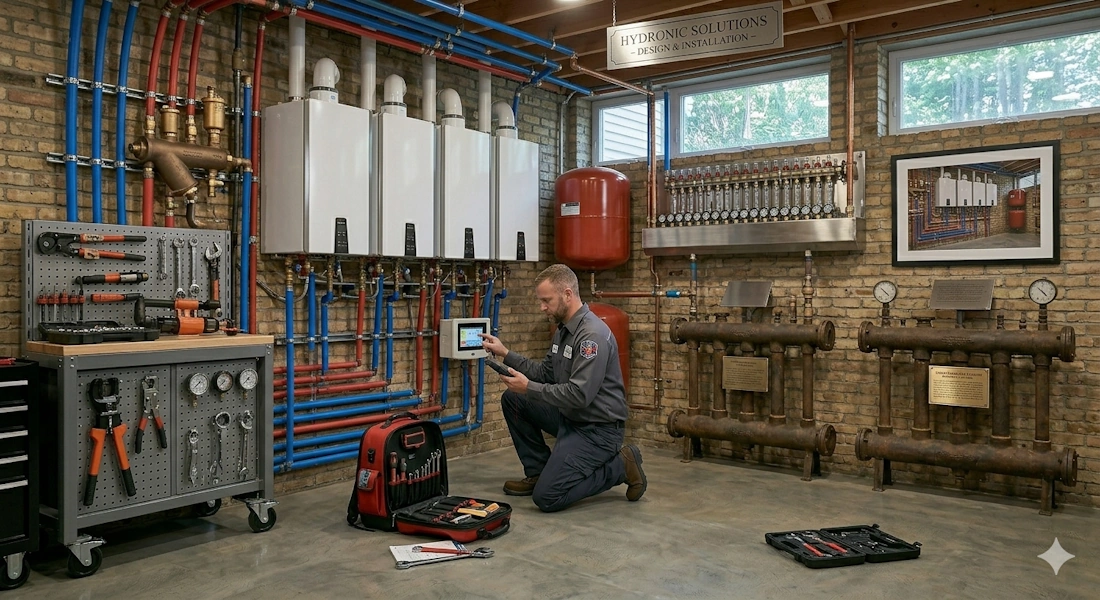
Boiler repair technician
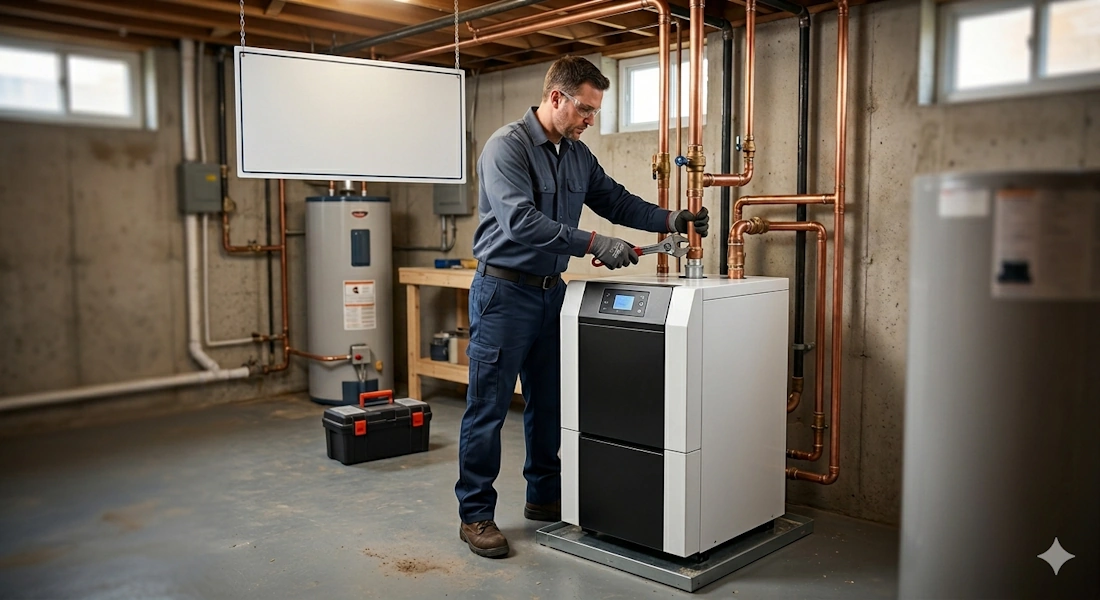
Boiler installation or completed job
Clear Findings Before Parts Are Replaced
Manzo’s boiler service process
Listen and inspect
The technician starts with the symptoms, repair history and what changed before the failure, then inspects the boiler and connected system.
Test the full system
Testing may include pressure, ignition, burners, controls, circulation, zones, venting, radiators, baseboard heat and visible piping.
Explain the options
The homeowner receives a plain-language explanation of what failed, what can be repaired and whether age or condition creates a larger concern.
Repair and verify
Approved work is completed, the boiler is tested under operating conditions and the area is cleaned before the visit is finished.
Boiler and Distribution Systems
Steam, hot-water, high-efficiency and hydronic heating systems
Steam boilers and radiators
Steam systems can have problems involving pressure, vents, traps, water level, controls, piping and radiators. Uneven heating, banging, slow radiators and water-level changes require technicians who understand how the entire steam system operates.
Hot-water and hydronic boilers
Hydronic systems move heated water through baseboard loops, radiators or radiant distribution. Circulators, zone valves, thermostats, air in the lines, pressure and piping all influence comfort. Related information can link naturally to Manzo’s radiant and hydronic heating service.
High-efficiency and wall-hung boilers
High-efficiency equipment may offer better fuel use when the system is properly selected, vented, drained, controlled and maintained. Installation must account for the home and the existing distribution system, not just the advertised efficiency rating.
Boilers that also support domestic hot water
Some homes use an indirect water heater or another arrangement that connects space heating and hot water. If the home loses both heat and hot water, Manzo can inspect the boiler, controls, circulators and the water-heating system instead of sending the homeowner between unrelated companies.
Heating and Plumbing Work Together
Boiler and radiator leaks
A leak can lower system pressure, damage nearby materials and prevent proper circulation. See leak detection and repair.
No heat and no hot water
Shared controls, an indirect tank or a boiler problem may affect both services. See Long Island water-heater service.
Frozen-pipe danger
A prolonged loss of heat can expose water lines in cold areas. See frozen-pipe repair when the risk is real.
Gas-line concerns
Gas boilers require safe fuel delivery. See gas-line repair.
Repair or Replace?
The best decision is based on the whole system, not one sales pitch.
Repair often makes sense when the boiler has been reliable, the failure is isolated and the cost is reasonable for the age and condition of the system. Replacement becomes more practical when breakdowns repeat, major components are deteriorated, parts are difficult to obtain, efficiency has declined or the boiler no longer heats the home evenly.
The connected system also matters. A new boiler cannot correct every comfort problem if the piping, radiators, baseboard loops, zone controls or home heat loss are ignored. Installation planning should review fuel, venting, distribution, sizing, domestic hot-water needs and the property’s long-term goals.
Repair may make sense when
- The boiler is generally reliable
- The problem is isolated and repairable
- Safety and efficiency remain acceptable
- Parts are available
- The repair cost fits the system age
Replacement deserves consideration when
- Service calls keep repeating
- Major components are failing
- Fuel costs rise while comfort declines
- Corrosion or leaks are widespread
- The boiler cannot meet the home’s needs
Boiler Repair Cost Factors
An honest estimate starts with diagnosis, not a single advertised number.
Boiler repair can mean anything from correcting a thermostat or control problem to replacing a circulator, valve, burner component, pressure control or major part. The cost depends on the type of boiler, the failed component, access to the equipment, labor, parts availability, urgency and whether the failure also involves piping, water pressure, venting or another safety concern.
A steam system with aging vents and uneven radiators presents a different problem than a modern wall-hung boiler showing a control error. A visible boiler leak may be simple to locate, while a system that loses pressure slowly can require inspection of the connected piping and distribution. The estimate should follow the evidence found during testing.
Cost can be affected by
- Steam, hot-water, oil, gas or high-efficiency boiler
- Control, ignition, burner, pump, valve or pressure failure
- Emergency timing and technician availability
- Equipment location and working access
- Age and availability of replacement parts
- Leaks, piping, venting or safety work
- Whether one repair reveals a larger system problem
A useful written estimate should describe the recommended work clearly enough for the homeowner to understand what is being repaired.
Boiler Installation Planning
A new boiler should be selected for the home, the distribution system and the homeowner’s long-term needs.
Replacement is not simply removing one box and installing another with a larger number on the label. Correct planning protects comfort, efficiency and serviceability.
Proper sizing
Oversized equipment can cycle frequently, waste fuel and create uneven operation. Undersized equipment may struggle during cold weather. The recommendation should consider the home’s heating load, construction, insulation and the actual distribution system rather than relying only on the old boiler size.
Venting and fuel
Fuel type, chimney condition, sidewall venting, combustion air, condensate and gas or oil supply all affect installation. High-efficiency equipment may require different venting and drainage than the boiler it replaces. These details should be planned before installation day.
Distribution and controls
The boiler must work with the home’s radiators, baseboard loops, radiant zones, pumps, valves and thermostats. New controls may improve comfort, but they cannot repair neglected piping or a distribution system that was never balanced properly.
Homeowners should also discuss domestic hot-water needs, available rebates or tax incentives, maintenance access and what is included in removal, startup and testing. When appropriate, link the efficiency discussion to ENERGY STAR residential boiler information rather than making unsupported savings promises.
Before the Service Visit
A few clear details can help the boiler call begin faster.
Homeowners should not open equipment panels, bypass safety controls or repeatedly reset a boiler that keeps shutting down. They can safely note what the system is doing, whether the entire home is cold or only one zone, whether hot water is also affected and whether water is visible near the boiler, radiators or piping.
It helps to identify whether the system uses radiators, baseboard heat or radiant flooring and whether the boiler appears to be steam or hot water. Share any warning lights, error codes, pressure changes, unusual sounds, recent repairs, thermostat changes or power interruptions. If the system begins working again, explain the earlier symptom because intermittent failures often return.
Clear information does not replace diagnosis, but it helps the technician understand the pattern and bring attention to the right parts of the system immediately.
Details to share when scheduling
- No heat everywhere or only in certain rooms
- No hot water as well as no heat
- Visible leaks or changing boiler pressure
- Banging, gurgling, whistling or ignition noises
- Error codes or warning lights
- Approximate boiler age and fuel type
- Recent plumbing, thermostat or electrical work
- Whether the failure is constant or intermittent
Preventive Boiler Service
Annual maintenance can reveal problems before winter demand exposes them.
What service may include
- Operating and safety controls
- Pressure and temperature behavior
- Visible leaks and corrosion
- Burner and ignition operation
- Venting and combustion review
- Circulation, zones and heat distribution
- General condition of connected piping
Maintenance supports reliability, safer operation and more consistent performance. It can identify small leaks, worn controls, pressure problems, circulation issues and venting concerns before they become emergency calls.
It should not promise that a boiler will never fail. Older equipment can still experience an unexpected component problem. The value is earlier information, better planning and a chance to correct obvious issues before the system is working its hardest.
Homeowners with older boilers, repeated pressure loss, uneven zones or a history of winter shutdowns may benefit from scheduling service before the first cold stretch rather than waiting for a complete loss of heat.
Limited-Time Boiler Offer
Qualifying Boiler Installation
Apply the current offer to a qualifying boiler installation or replacement project.
Must mention the offer when booking. Cannot be combined with other offers.
Plumbing, Heating & Cooling
Proof Near the Decision Point
Why Long Island homeowners choose Sal Manzo for boiler service
- More than 1,450+ Google reviews
- 4.8 average rating displayed on the website
- Serving Long Island since 1986
- Boiler, heating, hot-water and plumbing knowledge under one company
- Repair, maintenance, installation and replacement options
- Nassau County and nearby Suffolk County coverage
Nassau County and Nearby Suffolk County
Boiler service areas across Long Island
Verified Boiler and Heating Resources
ENERGY STAR residential boilers
Efficiency information for certified residential gas and oil boilers.
NFPA home-heating safety
Fire-safety guidance for heating equipment and seasonal home use.
CPSC carbon-monoxide safety
Official consumer information about carbon-monoxide alarms and emergency response.
Boiler FAQs
Questions Long Island homeowners ask before scheduling boiler service
How long do residential boilers usually last?
Many residential boilers operate for roughly 15 to 20 years, and some last longer with consistent maintenance. Age alone does not decide whether a boiler should be replaced. Reliability, corrosion, efficiency, safety, repair history, parts availability and the condition of the connected piping and controls all matter.
Should I repair or replace my boiler?
Repair often makes sense when the boiler is generally dependable, the failure is isolated and the repair cost is reasonable for the system age. Replacement deserves consideration when breakdowns repeat, major components are deteriorated, parts are difficult to obtain, fuel use keeps rising or the system cannot heat the home evenly.
Do you offer emergency boiler repair on Long Island?
Sal Manzo provides urgent boiler service for problems such as no heat, a boiler that will not fire, active leaking, low pressure, repeated shutdowns or a loss of both heat and hot water. Response time depends on location, call volume and the condition reported. Call (516) 783-0490 and explain what the boiler is doing.
Why is my boiler running but my radiators are cold?
The boiler may be producing heat while circulation or zoning prevents that heat from reaching the rooms. Possible causes include trapped air, a failed circulator, a stuck zone valve, low pressure, thermostat trouble, closed valves or a distribution problem. Testing the full hydronic loop is more useful than replacing a random part.
Why does my boiler keep losing pressure?
A boiler may lose pressure because of a visible or hidden leak, an expansion-tank problem, a pressure-relief issue, air in the system or another failing component. Repeatedly adding water without diagnosing the cause can hide a problem and may contribute to corrosion.
What causes banging or knocking in a boiler system?
Banging, knocking, whistling and gurgling can be related to trapped air, poor circulation, pressure changes, mineral buildup, delayed ignition, temperature problems, loose components or movement in the piping. The sound and when it occurs help narrow the cause.
Can a boiler provide both heat and hot water?
Yes. Some Long Island homes use a boiler with an indirect water heater or another combination arrangement. When both heat and hot water fail, the cause may involve shared controls, circulators, valves or the boiler itself. Manzo handles both boiler and water-heating service.
Do you service steam boilers and hot-water boilers?
Yes. The page is designed to cover common steam and hydronic hot-water boiler systems, including radiators, baseboard heat, circulators, zone controls and related piping. Final published copy should reflect the exact equipment types Manzo confirms it services.
Are high-efficiency or wall-hung boilers worth considering?
They can be a strong option when properly sized and installed for the home. Efficiency, venting, condensate management, fuel type, heat distribution, controls and available service support should all be reviewed. The best choice is the one that fits the property, not simply the model with the most impressive brochure.
How often should a boiler be serviced?
Annual professional maintenance before the heating season is a practical schedule for many residential boilers. Service may include operating checks, pressure, controls, circulation, visible leaks, venting, combustion and safety components, depending on the system.
Can a leaking boiler damage my home?
Yes. Even a small leak can affect pressure, circulation and nearby materials. Larger leaks can damage flooring, walls, electrical components or stored belongings. Water near electrical equipment, rapid flooding, a gas odor, smoke or a carbon-monoxide alarm requires immediate safety action.
What areas does Sal Manzo serve for boiler repair?
Sal Manzo serves Long Island homeowners across Nassau County and nearby Suffolk County communities. Priority locations for the new boiler and heating cluster include Wantagh, Seaford, Bellmore, Merrick, Massapequa, Levittown, East Meadow, Hicksville, Plainview and Farmingdale.
Final Call to Action
No heat, leaking boiler, cold radiators or an older system that keeps failing?
Call Sal Manzo Plumbing, Heating & Cooling for boiler repair, maintenance, installation and replacement across Long Island.