
Boiler Repair • No Heat • Leaks • Steam • Hydronic
Boiler repair for Long Island homes starts with the full heating system.
When a boiler stops heating, leaks, loses pressure, bangs, short-cycles or leaves part of the house cold, the failed component is not always obvious from the symptom. Sal Manzo Plumbing, Heating & Cooling provides boiler repair across Nassau County and nearby Suffolk County, with diagnosis focused on the boiler, controls, circulation, distribution and connected piping rather than guessing at a part.
Long Island homes use a mix of steam boilers, hot-water boilers, baseboard systems, radiators, multiple heating zones, indirect water-heating setups and newer high-efficiency equipment. A burner problem can stop the entire system. A circulator or zone-valve failure can leave one part of the house cold while another heats normally. Low pressure may be tied to a leak or feed issue. A thermostat complaint may actually begin at a control, transformer or wiring point. Good repair work starts by separating the symptom from the cause.
Homeowners already committed to new equipment should use Manzo’s Boiler Installation Long Island guide. Homeowners comparing the economics of replacing an older system should use the Boiler Replacement Cost Long Island guide. The existing Long Island boiler services hub remains the broad parent page for repair, maintenance, installation and replacement.
Urgent No-Heat and Boiler Leak Service
A boiler problem can affect heat, plumbing and the home itself.
Call promptly when the boiler stops heating, loses pressure, leaks, shuts down repeatedly or leaves indoor temperatures falling during cold weather. A no-heat event can become a property-protection issue when plumbing runs through vulnerable areas.
Urgent boiler symptoms
- Complete loss of heat
- Active boiler or piping leak
- Pressure dropping repeatedly
- Burner or ignition failure
- Boiler cycling on and off abnormally
Protect the property
- Keep people away from wet electrical equipment
- Protect vulnerable plumbing as temperatures fall
- Do not repeatedly reset a system without diagnosis
- Do not block venting or safety controls
- Use temporary heat only in a safe, manufacturer-approved manner
Leave and seek emergency help if
- You smell gas
- You see smoke or active fire
- A carbon-monoxide alarm sounds
- Anyone feels dizzy, weak or confused
- Flooding reaches electrical equipment
If there is a suspected gas leak, smoke, fire or carbon-monoxide alarm, leave the area and contact emergency services or the gas utility as appropriate. Do not stay inside to schedule a normal repair visit. Once the immediate hazard is addressed, the heating equipment can be evaluated before it is returned to service.
Repair-First Diagnosis
Boiler repair should answer three questions: what failed, why it failed, and what restores dependable heat.
The goal is not to turn every boiler call into a replacement discussion. A repair visit should establish the system condition, isolate the failed component or operating problem, and explain whether the proposed repair is sensible in the context of the boiler’s age, history and distribution system.
Combustion and ignition
Gas or oil burners, ignition components, flame-sensing controls and related safeties can create no-heat, lockout or intermittent-operation complaints. Diagnosis should follow the equipment and fuel system safely, not encourage homeowner adjustment of combustion components.
Pressure and water
Hydronic boilers depend on proper system pressure and water movement. Repeated pressure loss, relief-valve discharge, feed-water issues, expansion-tank problems or active leaks can affect both heat delivery and surrounding materials.
Circulation and zones
Circulators, zone valves, relays, thermostats, air in the system and distribution piping can create partial-heat complaints. One cold floor does not automatically mean the boiler itself is unable to produce heat.
Venting and controls
Limit controls, sensors, wiring, venting and safety devices influence how the boiler starts, runs and shuts down. A system that repeatedly locks out or trips a safety deserves diagnosis rather than repeated manual resets.
No Heat, Leaking Boiler or Cold Rooms?
Get the system diagnosed before a small failure becomes a larger winter problem.
Tell Manzo whether the home lost heat, hot water or both, and whether you noticed leaking, pressure changes, unusual sounds, an error code or repeated shutdowns.
Common Boiler Problems
The symptom inside the house does not always reveal which component failed.
A boiler can produce heat while failing to distribute it. It can lose pressure without a large visible puddle. It can make noise because of trapped air, circulation trouble, delayed ignition, mineral buildup, temperature changes or movement in the piping. Several failures can create the same homeowner complaint, which is why replacing the first suspicious part is not a reliable process.
Diagnosis should consider how the boiler starts, reaches temperature, maintains pressure, moves heat through the zones and shuts down. The connected system matters. Radiators, baseboard loops, pumps, valves, thermostats and water piping can all affect performance. If a leak is part of the complaint, Manzo can connect the heating diagnosis with leak detection and repair rather than pretending heating and plumbing exist in separate universes.
Prompt service is especially important for active leaks, repeated pressure loss, gas odors, smoke, carbon-monoxide alarms or indoor temperatures that are falling quickly. A loss of heat during a cold stretch can also raise the risk of frozen piping in unconditioned or poorly insulated areas.
Problems Manzo can investigate
- No heat or weak heat
- Cold radiators or baseboards
- Low or fluctuating pressure
- Water around the boiler
- Banging or knocking sounds
- Whistling or gurgling
- Ignition or burner trouble
- Failed circulator or zone
- Repeated resets
- Unexpected fuel use
- No heat and no hot water
- Uneven room temperatures
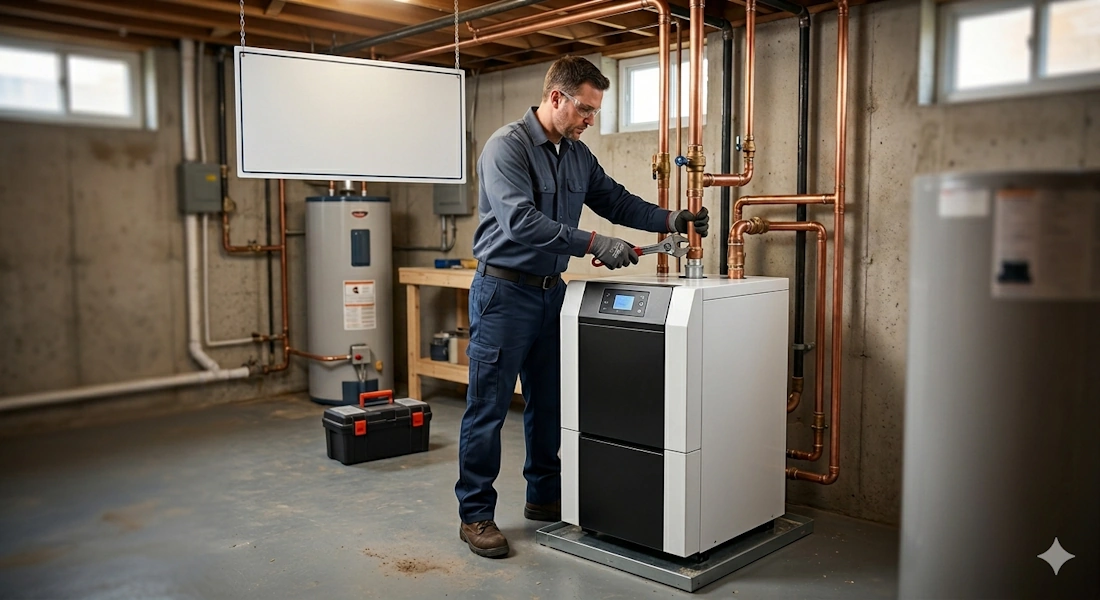
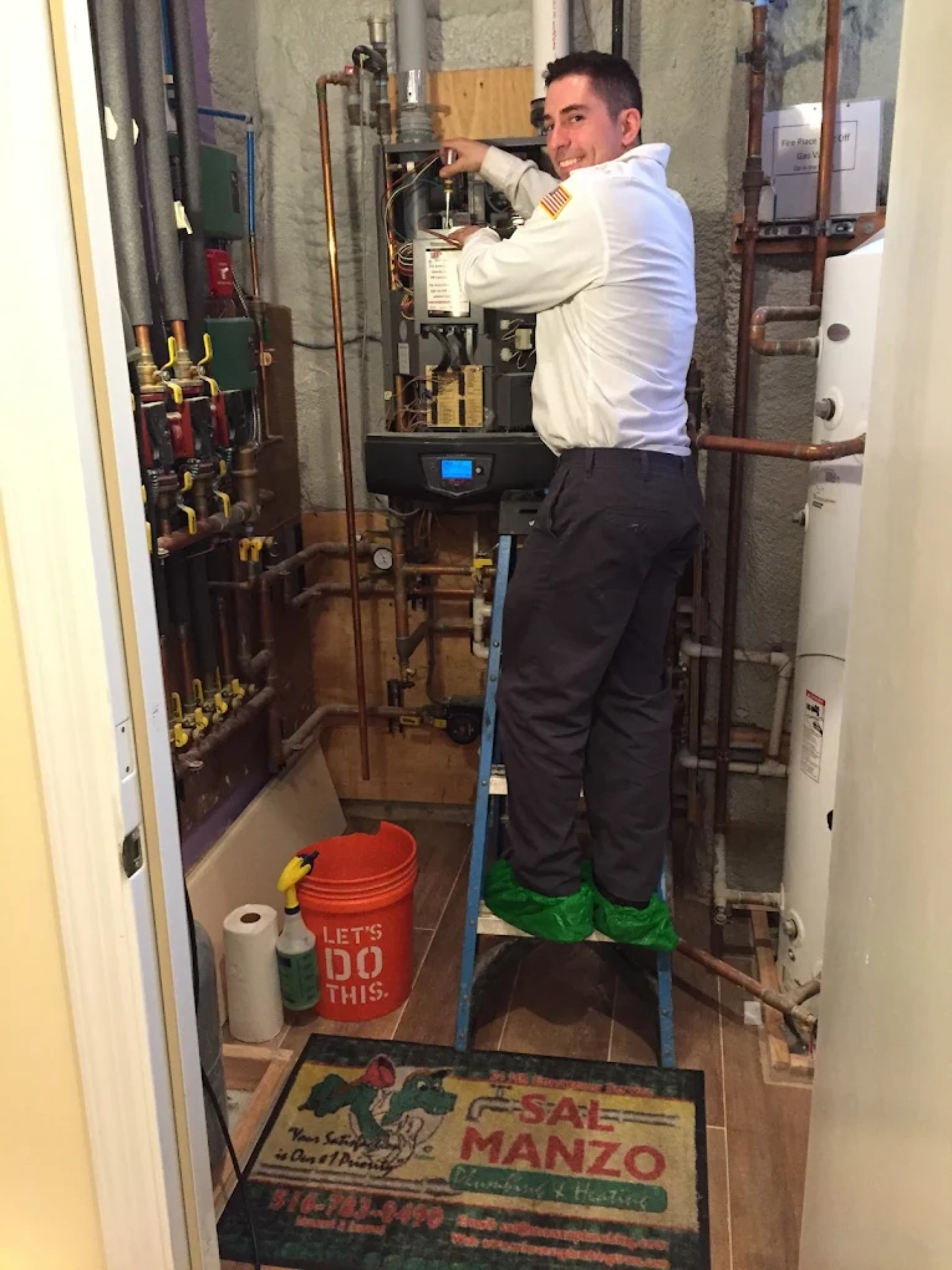
Real Manzo Boiler Work
What to Expect
A boiler repair process built around diagnosis, options and verification.
Listen and inspect
Start with what changed: no heat, one cold zone, leak, sound, odor, error code, pressure change, recent thermostat work or a problem that appears only under certain conditions.
Test the full system
Evaluate the boiler and the connected controls, circulation and distribution components that relate to the complaint instead of assuming the cabinet itself is the only possible source.
Explain the options
Describe the failed component, the proposed repair and any larger condition that matters. If the boiler is approaching the point where replacement should be compared, explain that separately rather than burying it inside a repair estimate.
Repair and verify
After an approved repair, operate the system and verify that the original complaint has been addressed. Check the relevant zones, controls, pressure and cycling behavior before considering the repair complete.
Boiler and Distribution Types
Steam, hot-water, high-efficiency and hydronic heating systems fail in different ways.
Older homes may use one-pipe or two-pipe steam with radiators. Other properties use hot-water boilers with baseboard loops, cast-iron radiators, radiant zones or multiple circulators and zone valves. Newer high-efficiency systems may use different controls, venting and condensate arrangements than older chimney-vented equipment.
System type changes the diagnostic path. Steam complaints can involve vents, traps, water level, pressure controls, returns and distribution balance. Hydronic complaints can involve pressure, air removal, circulators, zone controls, expansion components and flow through the distribution loops. Equipment model, installation history and previous modifications matter.
If radiant-floor zones are part of the property, the radiant and hydronic heating gives additional context. If the home uses a furnace rather than a boiler, move into the furnace cluster instead of forcing a boiler answer onto forced-air equipment.
Heating + Plumbing Connections
Boiler problems often cross the line between heating equipment and water piping.
Boiler and radiator leaks
An active leak can reduce system pressure, damage surrounding materials and interfere with circulation. The source may be at the boiler, a valve, connection, radiator, baseboard loop or other accessible piping. Use leak detection and repair when the water source extends beyond a routine heating component.
No heat and no hot water
Some homes use a boiler with an indirect water heater or another shared arrangement. When space heating and domestic hot water fail together, the relationship between controls, boiler operation and hot-water production should be considered. Manzo’s water-heater services remain the dedicated resource for stand-alone water-heater problems.
Frozen-pipe danger
A prolonged heating outage can expose water lines in basements, crawlspaces, exterior walls or other vulnerable areas. During cold weather, restoring heat and watching exposed plumbing can become equally important. See frozen-pipe repair guidance when there is evidence of frozen or burst piping.
Gas-line concerns
Gas-fired boilers depend on safe fuel delivery. Gas odors and suspected leaks are safety issues, not ordinary boiler troubleshooting. Leave the area and contact the appropriate emergency resource first. For non-emergency piping work, Manzo’s gas-line service covers that separate scope.
Repair vs Replacement
The right decision is based on the whole system, not the age of one part or one dramatic sales pitch.
Many boiler failures can be repaired. Replacement deserves a serious comparison when the repair would put significant money into a system with repeated failures, major corrosion, obsolete parts, distribution problems, poor reliability or other conditions that remain after the immediate component is fixed.
Repair may make sense when
- The failure is isolated and the rest of the boiler is in sound condition
- The system has been generally reliable and parts are readily available
- Venting, heat distribution and controls remain appropriate
- The repair restores dependable operation without leaving major known defects
- The home heats evenly enough and the owner is not already planning a broader heating upgrade
A repair-first recommendation should still explain any aging components or deferred issues the homeowner should watch. That is different from using every repair visit to manufacture urgency around a new system.
Replacement deserves comparison when
- Breakdowns are repeating and repair spending is becoming a pattern
- Corrosion, venting or safety-related conditions make the existing system questionable
- Critical parts are obsolete or difficult to source
- The boiler no longer matches the home’s heating load or distribution changes
- A major repair would leave an old, inefficient or unreliable system in place
If replacement is the direction, move out of repair intent. Use the Boiler Installation Long Island page for equipment and project planning, then the Boiler Replacement Cost Long Island page for the variables that shape the total project price.
Boiler Repair Cost Factors
An honest repair estimate starts with diagnosis, not a universal advertised price.
Boiler repair cost can vary because the same homeowner symptom may come from very different components. A thermostat or control problem, a circulator failure, a pressure issue, a leaking valve, an ignition component and a more complex piping or burner problem do not carry the same labor, parts or access requirements.
System type matters as well. Steam systems can involve components and distribution issues that differ from hot-water hydronic systems. Older equipment can be more difficult when replacement parts are obsolete or previous repairs have altered the original configuration. Emergency scheduling, difficult access, multiple failed components and the need to correct surrounding piping or venting can change scope.
Once diagnosis is complete, the homeowner can compare the repair to the condition and expected remaining reliability of the system. When the conversation becomes the cost of a new system rather than the cost of fixing this one, switch to the Boiler Replacement Cost Long Island guide.
When Repair Becomes an Installation Decision
If diagnosis shows that the old boiler is no longer a sensible repair candidate, the next decision is not simply “buy a boiler.” Proper installation planning should consider heat loss, fuel, venting, the existing steam or hydronic distribution system, controls, domestic hot-water needs, equipment location and the condition of the surrounding piping.
That deeper planning belongs on the dedicated Boiler Installation Long Island, NY page. It can explain sizing, equipment options, venting, controls and installation sequence without bloating this repair page. Homeowners who are still comparing whether the economics justify replacement can use the Boiler Replacement Cost Long Island guide first. Keeping those intents separate creates a cleaner buying path and allows internal links to do the job they were invented to do.
Need a repair?
Stay on this page for no heat, leaks, pressure, controls, circulation, steam and hydronic diagnosis.
Ready for new equipment?
Use the dedicated installation page for sizing, system planning, venting, equipment selection and installation scope.
Researching replacement price?
Use the dedicated cost guide for project variables, comparison questions and replacement-budget planning.
Before the Technician Arrives
A few clear details can help the boiler call begin faster.
When scheduling, describe what the boiler is doing now and what changed. Tell the office whether the home has no heat everywhere or only in certain rooms, whether domestic hot water is also affected, whether you see an active leak, whether system pressure changed, and whether an error code or lockout message is visible.
If you know the boiler brand, approximate age, fuel type or whether the home uses steam radiators or hot-water baseboard, share that information. Also mention recent thermostat work, electrical outages, plumbing work or renovations that happened before the problem appeared. A photo of the boiler label or control display can sometimes help the office understand what equipment is present, but it does not replace on-site diagnosis.
Do not remove covers, adjust gas valves, bypass safeties or repeatedly reset equipment in an attempt to create a better description. The useful information is what the system is doing naturally, not what it does after twenty minutes of amateur mechanical improvisation.
After the Repair
Maintenance can reveal developing problems before winter demand exposes them.
Boiler maintenance is not a guarantee against every failure, but periodic professional inspection can help identify leaks, pressure trouble, combustion or venting concerns, dirty or worn components, control problems and circulation issues before a minor condition becomes a no-heat call.
Maintenance needs vary by equipment and fuel type. A service visit may include visual inspection, operating checks, cleaning where appropriate, pressure and temperature observations, safety-control checks, combustion or venting evaluation where applicable, and attention to circulators, zone controls or other accessible components. The exact procedure should follow the equipment and system in front of the technician.
If a repair reveals a maintenance issue, ask what should be addressed now, what can be watched, and what should be included at the next scheduled service. That gives the homeowner a usable plan rather than the timeless industry classic, “everything is urgent because we printed it in red.”
Local Proof
Why Long Island homeowners consider Sal Manzo for boiler repair.
Boiler repair happens inside the home, often when the heat is already down. Homeowners need a company that can diagnose heating equipment and understand the plumbing, controls and distribution connected to it.
- Serving Long Island since 1986
- More than 1,400 customer reviews available to read on the live review page
- Boiler, heating, hot-water and plumbing capabilities under one company
- Repair, maintenance, installation and replacement paths without forcing every problem into the same solution
- Core Nassau County service with nearby Suffolk County coverage based on scheduling and scope
Nassau County + Nearby Suffolk County
Boiler repair across Long Island
Manzo’s core heating-service footprint is centered around Wantagh and nearby Nassau County communities, with additional Western Suffolk coverage based on scheduling and project scope.
For broader plumbing, heating and HVAC coverage in Nassau County, use Manzo’s Nassau County plumbing, heating and HVAC.
Independent Safety + Efficiency References
Useful boiler resources from official organizations.
ENERGY STAR Boilers
Efficiency and product guidance for residential boilers.
CPSC Home Heating
Consumer safety information for fuel-burning home-heating equipment.
Carbon Monoxide Safety
Official CPSC information on carbon-monoxide hazards and response.
NYSERDA Heating Systems
New York guidance for residential heating and cooling choices.
Boiler Repair FAQs
Questions Long Island homeowners ask before scheduling boiler service.
Why is my boiler running but part of the house is still cold?
The boiler may be producing heat while a circulation or distribution problem prevents that heat from reaching every zone. A failed circulator, zone valve, thermostat, air in a hydronic loop, radiator issue or other control problem can create partial heat. Diagnosis should separate heat production from heat distribution.
What causes boiler pressure to keep dropping?
Repeated pressure loss can be associated with an active or hidden leak, a relief-valve issue, expansion or feed-water components, air removal or other hydronic-system conditions. Adding water repeatedly without identifying the cause can mask the problem, so a system that keeps losing pressure should be evaluated.
Why is my boiler banging, knocking or gurgling?
Noise can have different causes depending on whether the system is steam or hot water. Air, circulation problems, temperature changes, piping movement, pressure, delayed ignition, mineral buildup or steam-distribution issues may all sound different to a technician than they do from an upstairs bedroom. Describe when the noise occurs and whether heat output changed at the same time.
Should I keep resetting a boiler that locks out?
No. A reset may temporarily restart some systems, but repeated lockouts indicate a condition that deserves diagnosis. Repeatedly resetting equipment can hide useful failure information and is not a substitute for finding the reason a safety or control is shutting the boiler down.
Can a boiler leak be repaired?
Many leaks come from valves, connections, pumps, piping or other serviceable components. A leak involving the boiler vessel or severe corrosion can be a different decision. The location, cause, system pressure, age and overall equipment condition determine whether repair is practical.
Do you repair steam and hot-water boilers?
Manzo’s Long Island heating work includes common steam and hydronic hot-water system issues, with repair scope depending on the exact equipment, fuel, controls and distribution system. When scheduling, share whether the home uses steam radiators, hot-water baseboard or another known configuration so the visit can be prepared appropriately.
When should I repair a boiler instead of replacing it?
Repair can make sense when the failure is isolated, the rest of the system is in reasonable condition, parts are available and the repair restores dependable operation. Replacement becomes more worth comparing when failures repeat, major corrosion or safety concerns exist, critical parts are obsolete or a large repair would leave an unreliable system in place.
Where can I compare boiler replacement cost?
Use Manzo’s dedicated Boiler Replacement Cost Long Island guide. Keeping project-price research on its own page lets this repair page stay focused on diagnosis and repair decisions instead of mixing two different homeowner intents into one oversized article.
Where should I go if I already know I need a new boiler?
Use the Boiler Installation Long Island page for new-equipment planning, sizing, distribution, venting, controls and installation scope. If the system is still repairable and you are unsure which direction makes sense, start with diagnosis here.
What should I do if I smell gas or a carbon-monoxide alarm sounds?
Leave the area and contact emergency services or the gas utility as appropriate. Do not operate switches, try to diagnose the boiler, or remain inside to schedule routine service. Once the immediate hazard is addressed, the equipment can be inspected before it is used again.
Can a no-heat problem lead to frozen pipes?
It can. The risk depends on outdoor temperature, how long heat is lost, where plumbing runs and how well those areas are insulated. If indoor temperatures are falling during freezing weather, protecting vulnerable piping can become part of the response. If a pipe freezes or bursts, use Manzo’s dedicated frozen-pipe and emergency-plumbing resources.
How do I schedule boiler repair with Sal Manzo?
Call (516) 783-0490 or use the request-service form. Share the address, equipment type if known, whether the home has no heat everywhere or only in certain zones, and any leak, pressure change, error code, unusual sound or hot-water issue you noticed.
Schedule Boiler Repair
No heat, leaking boiler, cold radiators or a system that keeps shutting down?
Call Sal Manzo Plumbing, Heating & Cooling for boiler diagnosis and repair across Long Island. If the diagnosis shows that new equipment is the better path, the dedicated installation and replacement-cost pages are already connected to the same boiler cluster.