
Need diagnosis first?
If the furnace failed but replacement is not certain, use the new Furnace Repair Long Island page.
Primarily comparing price?
Use the Furnace Replacement Cost Long Island guide for cost drivers and replacement budgeting.
Comparing system types?
See Heat Pump Replacement Long Island before locking into another combustion furnace.
Start With the House, Not the Equipment Sticker.
Furnace installation is a buying decision, but it is also a design decision. Two furnaces with similar efficiency ratings can perform very differently when one is correctly sized and the other is too large for the home. Duct restrictions, return-air problems, venting, insulation, thermostat location, fuel supply, electrical capacity, and the condition of the existing system all affect the result.
That is why this page is separate from the general furnace service hub. If your furnace is broken and you are still deciding whether it can be repaired, start with furnace repair. If you already know replacement is likely and want to understand the variables that drive price, use the furnace replacement cost guide. This page is for homeowners actively planning a new furnace installation.
Proper Furnace Sizing Matters More Than “Bigger Is Better.”
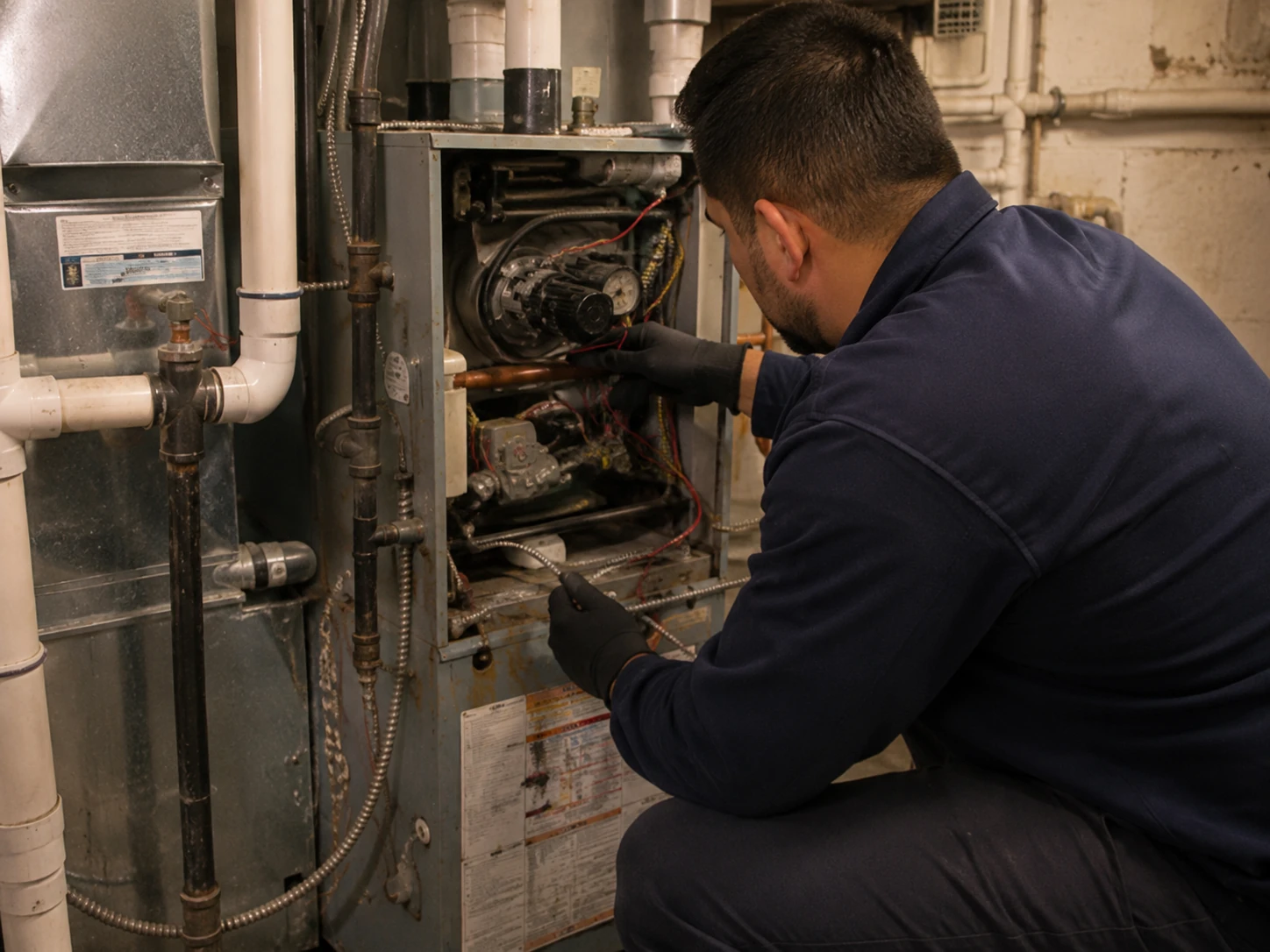
A furnace should be selected around the heating load of the home, not simply copied from the nameplate on the old unit. Oversized equipment can satisfy the thermostat quickly and shut off before heat is distributed evenly. That short cycling can reduce comfort and add wear. Undersized equipment may run excessively and struggle during colder weather.
A professional evaluation should consider square footage, insulation, windows, air leakage, orientation, additions, ceiling height, duct layout, supply and return capacity, and the condition of the building envelope.
The equipment should fit the house. The house should not be forced to live with whatever size happened to be there before.
Why this matters
- More even temperatures from room to room
- Fewer unnecessary on/off cycles
- Better match between blower and duct system
- Lower risk of comfort complaints after installation
- A more defensible equipment recommendation
Independent reference: DOE guidance on proper HVAC sizing.
Understand AFUE Without Buying a Number.
AFUE, or Annual Fuel Utilization Efficiency, describes how efficiently a furnace converts fuel into usable heat over a typical year. A higher AFUE can reduce wasted fuel, but the best choice still depends on the home, installation requirements, fuel cost, venting configuration, expected ownership period, and the price difference between equipment tiers.
ENERGY STAR explains that certified furnaces meet higher efficiency criteria and use efficient blower technology. High-efficiency condensing furnaces may require different venting and condensate handling than older standard-efficiency equipment. Those details matter in basements, utility rooms, finished spaces, and older Long Island homes.
Efficiency should be evaluated as part of the whole project. A high-AFUE furnace attached to restrictive ductwork or installed without proper airflow setup is still a compromised system.
Compare more than AFUE
- Heating capacity and load match
- Blower type and airflow capability
- Single-stage, two-stage, or modulating operation
- Venting and condensate requirements
- Thermostat / control compatibility
- Warranty and serviceability
- Total installed cost, not just equipment price
The Furnace and the Ductwork Have to Work as One System.
A new furnace cannot fix every airflow problem by itself. If some rooms have always been too cold, supply runs are undersized, return air is limited, filters are overly restrictive, or duct leakage is severe, replacing the furnace without reviewing the distribution system can preserve the same comfort problem for another decade.
During planning, the technician should review accessible duct conditions, filter configuration, blower requirements, return-air capacity, register performance, and obvious restrictions. Not every project needs new ductwork. The goal is to identify whether the existing system can support the airflow the new furnace needs and whether small corrections would materially improve comfort.
Venting, Gas, Electrical, Drainage, and Safety Are Part of the Installation.
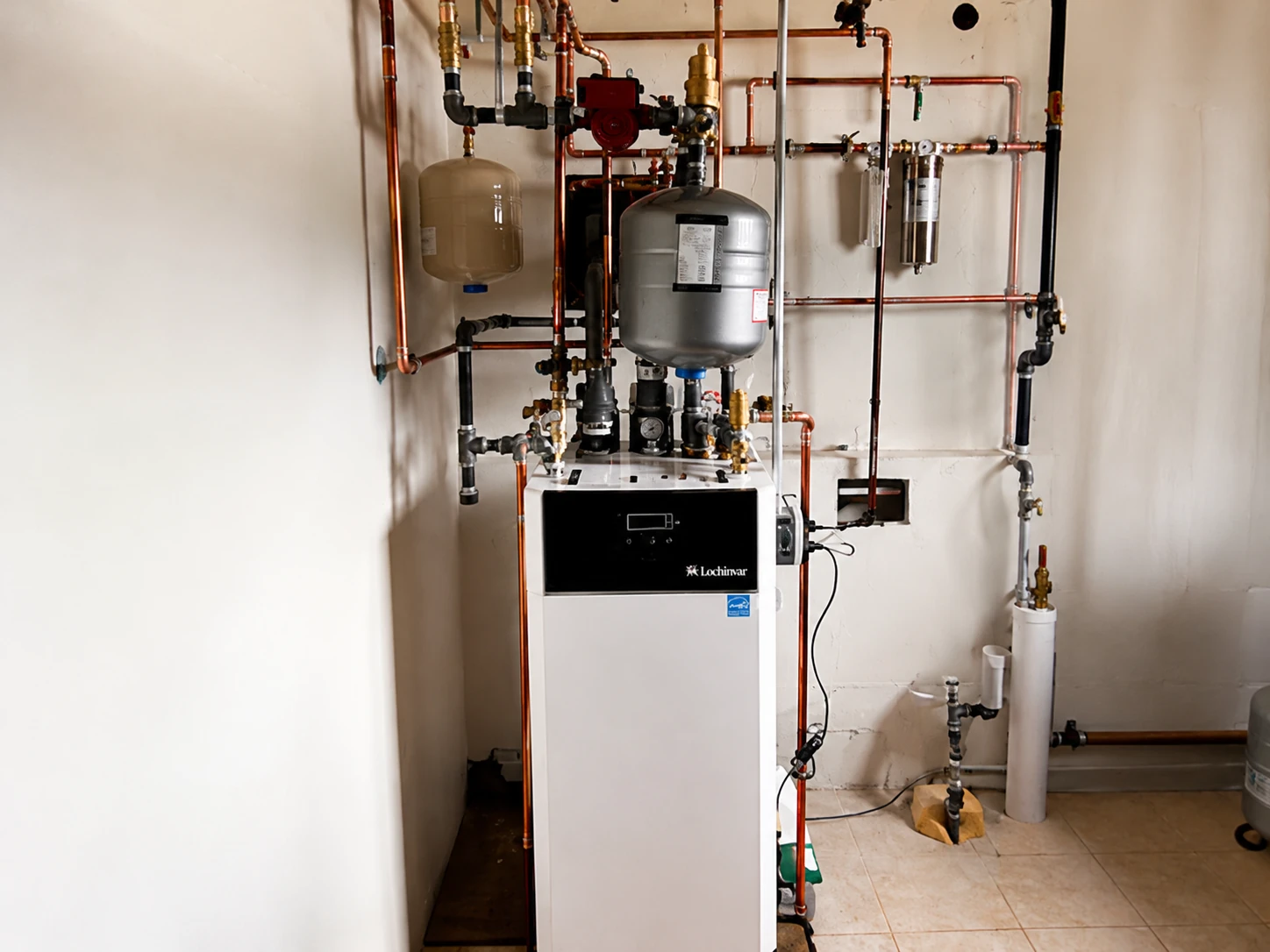
Furnace installation involves more than setting a cabinet in place. Gas-fired systems depend on safe fuel delivery, combustion, venting, electrical controls, and proper startup. High-efficiency systems may also create condensate that must be routed and protected correctly.
Fuel + venting
Review gas piping, shutoffs, vent materials, combustion-air needs and connections. If a fuel-line issue is found, use qualified gas-line service.
Air + controls
Confirm supply and return transitions, filter access, blower setup, thermostat operation and control compatibility.
Startup + testing
Verify operating cycles, ignition, safety controls, airflow, temperature response, venting and condensate management where applicable.
What a Professional Furnace Installation Should Look Like
Evaluate the existing home and system.
Review the old furnace, fuel type, ductwork, thermostat, venting, electrical supply, comfort complaints, equipment access, repair history, and additions or renovations that may have changed the heating load.
Size and select the equipment.
Match capacity, efficiency, blower capability, cabinet configuration, venting requirements, controls, and warranty options to the house rather than forcing the house to fit convenient equipment.
Explain the complete project scope.
Before work begins, the homeowner should understand what is being replaced, what is being reused, whether duct or vent modifications are required, what controls are included, how removal will be handled, and what the final price covers.
Protect the home and remove old equipment.
Floors and work paths should be protected. Existing equipment should be disconnected and removed carefully, with attention to gas, electrical, venting, and surrounding finishes.
Install the new furnace and required transitions.
Set the unit, adapt supply and return connections, complete fuel and electrical connections, install or update venting, address condensate where needed, and make filter and service areas accessible.
Commission and test the system.
Startup is not the end of the job. Test operating cycles, airflow, temperature response, safety controls, thermostat operation and visible installation details.
Walk the homeowner through the system.
Review filter changes, thermostat operation, maintenance expectations, warranty information, shutoffs, and anything to watch during the first heating season.
What Affects Furnace Installation Cost on Long Island?
Furnace installation prices vary because homes and project scopes vary. The equipment itself is only one part of the price. Capacity, efficiency, manufacturer, blower technology, fuel type, venting, duct transitions, gas-line work, electrical changes, thermostat upgrades, condensate routing, access, permits or code requirements, removal of the old unit, and corrections to the existing installation can all affect the total.
For that reason, this installation page should not publish a fake one-size-fits-all price range. Manzo maintains a dedicated Furnace Replacement Cost Long Island guide for homeowners whose primary question is budget. Use that page for deeper cost context, then return here when you are ready to evaluate equipment and installation quality.
Should You Install Another Furnace or Consider a Heat Pump?
A furnace is not the only path for every Long Island home. Heat pumps can provide both heating and cooling, and current cold-climate equipment has expanded the number of homes where a heat-pump option deserves consideration. The right comparison depends on the existing fuel source, electrical service, ductwork, insulation, cooling needs, comfort goals, operating costs, equipment condition, and available incentives.
If you are replacing an aging furnace and also expect to replace central air soon, comparing a furnace-based system with a heat-pump strategy may be worthwhile. New York programs and utility incentives change, so rebate language should be verified rather than frozen into permanent page copy.
Compare the new Heat Pump Replacement Long Island page and current NYSERDA heating-system guidance before making the final choice.
Stay with a furnace when…
- The existing forced-air layout is a strong fit
- Fuel and venting conditions support the project
- The homeowner prefers the furnace-based system
- Replacement is needed without redesigning the entire comfort strategy
Compare a heat pump when…
- Heating and cooling are both nearing replacement
- Electrification is a priority
- Current incentives materially change project economics
- The home and electrical system are good candidates
Keep Promotions Centralized So This Page Does Not Go Stale.
A furnace replacement is often planned, but sometimes old equipment decides the schedule. Financing can help homeowners spread the cost of qualifying projects, and current installation offers may be available.
Because promotional amounts and expiration dates change, this page should link to the live financing options and HVAC coupons rather than hard-code a dollar amount that becomes wrong three months later.
Before scheduling
- Review current financing
- Check current installation offers
- Confirm eligibility with the office
- Compare total project scope, not just monthly payment
Long Island Furnace Installation Has Local Housing Variables.
Long Island housing is not uniform. A mid-century cape in Wantagh, a split-level in Massapequa, a ranch in Levittown, and a renovated home in Merrick can have very different duct layouts, insulation levels, equipment access, and comfort problems even when the square footage looks similar on paper.
Older homes may have duct systems modified through several renovations. Finished basements can complicate access to trunk lines. Additions can change the original heating load. Replacement windows, air sealing, attic insulation, and remodeling can reduce or redistribute demand. Some homes have paired furnace and central-air systems that should be evaluated together because the same blower and ductwork support both heating and cooling.
For broader coverage, use the Long Island service-area page.
A Furnace Installation Should End With a Tested System and Clear Answers.
A replacement project is easier when the same company can evaluate heating, cooling, gas, plumbing, drainage, and the related mechanical details around the job. Sal Manzo Plumbing, Heating & Cooling has served Long Island homeowners for decades and handles furnace service as part of a broader HVAC and plumbing operation.
The live review page reports more than 1,400 Google reviews. That does not replace a proper estimate, but it gives homeowners a substantial body of local feedback to review before making a major purchase.
Installation priorities
- Clear equipment and scope explanation
- Correct sizing and airflow review
- Code-conscious venting and connections
- Clean work and protected work areas
- Startup, safety testing and homeowner walkthrough
Furnace Installation Questions Long Island Homeowners Ask
How long does furnace installation take?
Many straightforward residential replacements can be completed within a working day, but timing depends on access, venting, duct modifications, controls, fuel or electrical changes, code requirements, and whether unexpected conditions are found after the old equipment is removed.
Do I need the same size furnace as my old one?
Not automatically. The old furnace may have been oversized, the house may have been renovated, or insulation and windows may have changed. Capacity should be reviewed against the current heating load and duct system.
What is AFUE?
AFUE is Annual Fuel Utilization Efficiency, a standardized measure of how efficiently a furnace converts fuel into heat over a typical year. A higher number means less fuel is lost, but installation quality and system design still matter.
Is a high-efficiency furnace always worth it?
Not in exactly the same way for every home. The answer depends on fuel costs, venting changes, project price, how long you expect to own the home, existing ductwork, comfort goals, and the efficiency of the equipment being replaced.
Can you install a furnace if my ductwork is old?
Often yes, but the duct system should be evaluated. Restrictions, leakage, inadequate return air, poor balancing, or undersized runs can limit the performance of new equipment.
Should I replace my central air at the same time?
Sometimes. If the furnace and AC share an air handler or blower section and both systems are old, coordinating replacement can simplify compatibility and avoid overlapping labor later. The right timing depends on the age and condition of both systems.
Should I choose a furnace or a heat pump?
Compare the home’s fuel source, electric capacity, ductwork, insulation, cooling needs, operating goals, upfront cost, available incentives, and the condition of existing equipment. Some homes are better candidates for one strategy than another.
Can financing be used for furnace installation?
Financing may be available for qualifying projects. Review the live financing page for current options and confirm eligibility before relying on a particular plan.
Are there rebates for furnace installation on Long Island?
Programs change. Some incentives focus on high-efficiency or electrification upgrades rather than conventional furnace replacement. Check current NYSERDA, utility, manufacturer, and federal information for the equipment being considered instead of assuming an old rebate still applies.
What should I ask before approving a furnace estimate?
Ask how the unit was sized, what efficiency level is proposed, what is included in the price, whether duct or vent modifications are needed, what thermostat and filter setup are included, what warranty applies, who handles permits or inspections if required, and how the system will be commissioned after installation.
What happens to my old furnace?
Removal and disposal should be addressed in the project scope. The installer should explain whether removal is included and how the work area will be protected during the changeout.
How do I schedule furnace installation with Sal Manzo?
Call 516-783-0490 or use the request-service form. If the existing furnace is still operating, mention that the project is a planned installation so the appointment can focus on evaluation, equipment options, and scope rather than emergency diagnosis.
Useful Furnace and HVAC References
Use a few high-quality outbound links for factual support, not a parade of random directories pretending to be authority.
Ready to Plan Your Furnace Installation?
If you already know a new furnace is the next step, schedule an installation evaluation before the old system forces the decision during the coldest week of the year. Sal Manzo Plumbing, Heating & Cooling serves homeowners across Nassau County and nearby Suffolk County communities.
Furnace Hub • Furnace Repair • Replacement Cost • Heating & AC Hub