Who repairs furnaces on Long Island?
Furnace repair should begin with the symptom and a real system diagnosis, not a replacement pitch. A furnace that will not start can have a very different cause from one that starts normally but blows cool air. Likewise, a furnace that cycles every few minutes may have an airflow restriction, thermostat issue, flame-sensing problem, overheating condition, control failure, or a sizing problem that cannot be solved by swapping one random part.
That is why this page is intentionally focused on repair. If the unit is old, unsafe, inefficient, or repeatedly failing, Manzo can also explain the replacement path. Homeowners comparing the larger investment can review the Long Island furnace replacement cost guide once that page is published and verified.
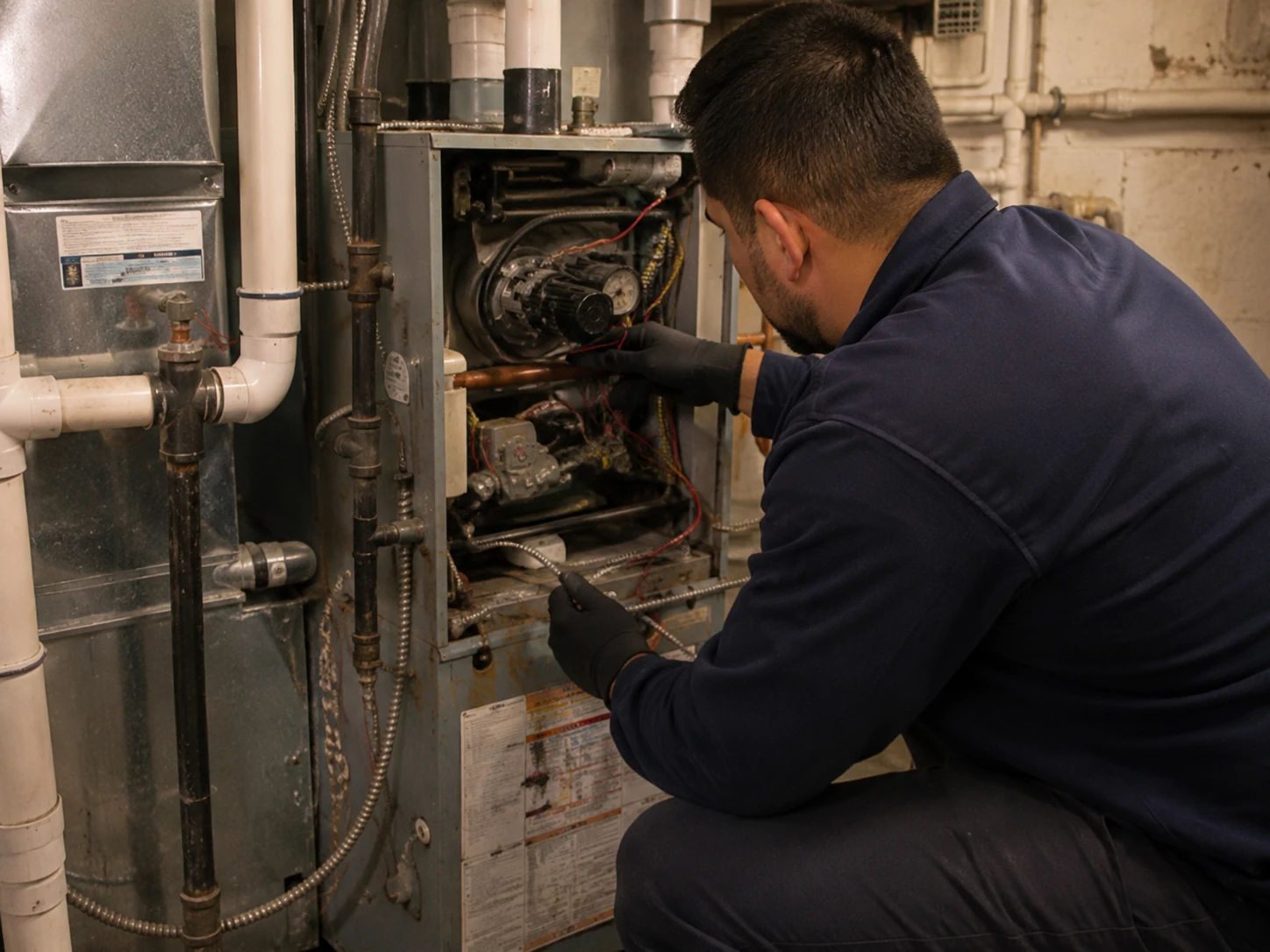
What does a furnace problem look like before the heat disappears completely?
Some furnace failures are obvious. Others give you several warnings before the system finally stops. Calling while the furnace is still operating can give a technician more information and may keep a cold-house problem from becoming a plumbing problem too.
Furnace will not turn on
The thermostat may be calling for heat while the furnace remains silent, attempts ignition and stops, or starts only after repeated resets. Possible causes can involve power, controls, ignition, fuel supply, limit switches, or safety shutdowns.
Cold air from the vents
Cool air can result from thermostat settings, ignition failure, burner trouble, an overheated furnace shutting down the burners, airflow restrictions, or a blower continuing to run after the heating cycle stops.
Short cycling
A furnace that starts and stops too often wastes energy and adds wear. Airflow restrictions, overheating, thermostat placement, flame-sensor issues, failing controls, or equipment sizing can all contribute.
Strange furnace noises
Rattling, squealing, scraping, booming, buzzing, and grinding deserve attention. The source may be as simple as a loose panel or as serious as a blower, motor, ignition, burner, or combustion issue.
Uneven heating
One cold room does not always mean the furnace itself has failed. The problem can involve ductwork, dampers, registers, airflow, insulation, thermostat location, or a furnace that is no longer keeping up with the home.
Unusual odors
A brief dusty smell at seasonal startup is different from persistent burning, electrical, smoky, or gas odors. If you smell gas, see smoke, or a carbon-monoxide alarm sounds, leave the area and contact the appropriate emergency service.
A good furnace repair call should answer one question first: what actually failed?
Replacing parts without testing the system is expensive roulette. A proper furnace diagnosis follows the heating sequence and checks the components that can interrupt it. The exact steps vary by equipment, but the technician may review thermostat demand, electrical power, ignition, burners, flame sensing, blower operation, filter condition, airflow, venting, safety switches, temperature rise, control operation, and visible equipment condition.
That process matters because the visible symptom is not always the failed component. A dirty filter can restrict airflow enough to cause overheating. Overheating can trigger a safety limit. The homeowner experiences a furnace that shuts down early, but the limit switch may be doing exactly what it was designed to do. Replacing the switch while ignoring the airflow problem would simply create another service call.
Listen to the symptom
When did the problem start? Is there no heat, weak heat, unusual cycling, noise, odor, or a problem limited to certain rooms?
Test the heating sequence
The technician checks the parts and safety controls involved in starting, producing, and distributing heat instead of assuming the first visible symptom is the root cause.
Explain repair options
You should understand what failed, what the proposed repair addresses, and whether the furnace shows other age, safety, or reliability concerns.
Test after repair
Approved work should end with operational testing so the furnace starts, heats, blows air, and cycles as expected before the service call is complete.
Furnace problems Manzo can diagnose across Long Island homes
The exact repair depends on the furnace type and what testing shows. These are common categories of failure, not a promise that every symptom has one universal fix. Heating equipment, naturally, refused to be that convenient.
Ignition & igniter problems
Modern furnaces may use electronic ignition or hot-surface igniters. Failure can prevent burners from lighting even when the thermostat calls for heat.
Flame-sensor trouble
A dirty or failing flame sensor can cause burners to light briefly and then shut down when the control does not confirm a stable flame.
Blower & motor issues
Weak airflow, unusual sounds, overheating, or no air from the registers can involve the blower assembly, motor, capacitor, controls, or restrictions.
Thermostat & control failures
Incorrect settings, wiring issues, failing thermostats, boards, relays, or related controls can interrupt the call for heat or create erratic cycles.
Airflow restrictions
Dirty filters, blocked returns, closed registers, duct problems, or blower trouble can reduce airflow and make the furnace run hotter and less effectively.
Limit & safety shutdowns
Safety controls can stop furnace operation when unsafe or abnormal conditions occur. The repair should address the reason for the shutdown, not merely bypass it.
Burner & combustion concerns
Fuel-burning furnaces require proper ignition, combustion, venting, and safety operation. Visible soot, repeated ignition trouble, gas odor, or CO alarms require prompt attention.
Duct & distribution problems
If the furnace makes heat but rooms remain uncomfortable, the system may need airflow and ductwork evaluation rather than another furnace component.
No heat during a Long Island cold spell deserves a faster response.
When a furnace fails in cold weather, the problem is not limited to comfort. Indoor temperatures can fall quickly, older adults and children may be affected sooner, and plumbing in exposed areas can become vulnerable if the home remains cold long enough. If the furnace will not run, call and describe exactly what you see and hear.
- Tell the dispatcher whether the furnace is completely off or attempting to start.
- Note any blinking furnace fault code without removing panels or defeating safety switches.
- Check whether the thermostat has power and is set to heat.
- Confirm obvious electrical breakers have not tripped, but do not repeatedly reset a breaker that will not stay on.
- Keep combustible materials away from heating equipment.
- If the home temperature is falling, protect vulnerable plumbing and review Manzo’s frozen pipe service information.
When is furnace repair still the right move?
A furnace does not become disposable just because it had one bad day. Repair can make excellent sense when the equipment is otherwise safe, reasonably efficient, properly sized, and has an isolated failure. A newer furnace with a worn igniter, failed thermostat, or repairable blower problem can have plenty of useful service life ahead of it.
The decision becomes harder when the furnace is older, has a history of repeated failures, shows major heat-exchanger or venting concerns, struggles to heat the home, or requires a repair large enough that the homeowner should compare it with the cost and warranty of replacement. The right answer is based on the whole system, not a fake rule that every furnace over a certain birthday must be hauled away.
For a detailed breakdown of the factors that change equipment and installation pricing, use the Furnace Replacement Cost Long Island, NY guide. The broader Long Island furnace service hub covers maintenance, installation, replacement, and repair together.
Furnace repair pricing depends on the failure, access, parts, and what testing uncovers.
A furnace repair page should not pretend every no-heat call costs the same amount. The useful question is what failed and what work is necessary to restore safe, reliable operation.
Failed component
A thermostat, igniter, flame sensor, blower motor, control board, safety device, or other part can involve very different labor, testing, and material costs.
Furnace age & condition
Older equipment can require additional diagnostic time, harder-to-source parts, or a larger repair-vs-replacement discussion when multiple components show wear.
Access & configuration
Tight mechanical spaces, venting arrangements, duct access, wiring, condensate routing, or previous modifications can affect the work needed to complete a repair correctly.
Emergency timing
Urgent service during extreme weather, evenings, weekends, or periods of high demand can affect scheduling and service charges. Ask about current availability when calling.
Safety-related work
Combustion, venting, gas, electrical, or carbon-monoxide concerns require proper testing. A cheaper shortcut is not cheaper if the underlying safety issue remains.
Related airflow problems
Sometimes the failed part is only part of the story. Filter, duct, return-air, blower, or distribution problems may need correction so the furnace does not repeat the same failure.
Furnace repair is easier when one company can also see the heating and plumbing around it.
Long Island homes do not all use the same heating setup. Some have forced-air furnaces. Others have boilers, hydronic baseboard, heat pumps, ductless systems, or combinations created through additions and renovations. A homeowner can describe “no heat” while the actual problem sits in a thermostat, furnace, boiler, water-heating connection, zone control, duct system, or related plumbing.
Sal Manzo Plumbing, Heating & Cooling has served Long Island since 1986 and works across plumbing, heating, cooling, water heaters, boilers, furnaces, and heat pumps. That broader service mix matters when symptoms overlap. If you are not sure whether the problem is specifically the furnace, start with the Long Island heating repair page. If you know you have a forced-air furnace and the problem is with that equipment, this repair page is the more direct path.
Homeowners considering another type of system can also review heat pump service, boiler service, and the complete Long Island HVAC services hub.
Preventive service cannot stop every repair, but it can catch problems before the first freezing night.
Annual furnace maintenance gives a technician a chance to inspect the heating system before it is working at full winter load. The U.S. Department of Energy recommends professional maintenance each year and keeping furnace filters clean or replaced. CPSC also recommends yearly professional inspection of fuel-burning heating systems to reduce carbon-monoxide risks.
Maintenance can include reviewing filters and airflow, ignition and burners, visible venting, electrical connections, blower operation, thermostat response, safety controls, and overall furnace condition. The exact checklist depends on the equipment. The point is not ceremonial “tune-up” language. It is to identify wear, restrictions, unsafe conditions, and performance problems while the homeowner still has time to plan.
Before heating season:
- Replace or clean the filter as appropriate for the system.
- Keep return grilles and supply registers open and unobstructed.
- Clear storage and combustible materials away from the furnace.
- Test smoke and carbon-monoxide alarms according to manufacturer instructions.
- Schedule professional service before the first sustained cold spell.
- Save Manzo’s number: (516) 783-0490.
Furnace repair service areas across Long Island
Sal Manzo serves homeowners from Wantagh across Nassau County and nearby Suffolk County communities. The strongest local pages should be linked where they are already published and verified, with the broader service-area hub handling the rest rather than filling this page with broken city links.
Independent furnace safety and efficiency guidance
Manzo’s service page should answer the homeowner’s practical questions and also point to independent safety information when the subject deserves it.
Questions Long Island homeowners ask when the furnace starts acting up
Who should I call for furnace repair on Long Island?
Call an HVAC company that diagnoses forced-air furnace problems and serves your area. Sal Manzo Plumbing, Heating & Cooling provides furnace repair across Wantagh, Nassau County, and nearby Suffolk County communities. Call (516) 783-0490 and describe whether you have no heat, weak heat, cold air, short cycling, unusual noise, odor, or another symptom.
Do you provide emergency furnace repair?
Emergency heating service is available for urgent no-heat and furnace-failure situations. Availability and arrival time depend on location, weather, call volume, and scheduling. If there is a gas odor, fire, smoke, carbon-monoxide alarm, or another immediate hazard, leave the area and contact the appropriate emergency service first.
Why is my furnace running but blowing cold air?
Possible causes include thermostat settings, ignition or burner failure, airflow restrictions, overheating that shuts down the burners, blower-control issues, fuel-supply problems, or safety controls interrupting the heating cycle. Testing is the fastest way to separate a simple setting from a real equipment failure.
Why does my furnace keep turning on and off?
Short cycling can be caused by restricted airflow, thermostat problems, overheating, flame-sensor trouble, failing controls, or equipment sizing. Repeated short cycles increase wear and usually deserve diagnosis instead of repeated resets.
Can a dirty furnace filter cause no heat?
A severely restricted filter can reduce airflow and contribute to overheating. When the furnace gets too hot, a safety limit may shut the burners down. Changing the filter may be part of the solution, but repeated shutdowns should still be inspected to confirm there is not another airflow, blower, or control problem.
How much does furnace repair cost on Long Island?
Repair cost depends on the failed part, diagnostic time, furnace type and age, access, safety condition, urgency, and whether related airflow or venting problems also need correction. The best estimate comes after diagnosis. For major-system planning, see Manzo’s furnace replacement cost guide.
Should I repair or replace an older furnace?
Repair can still make sense when the furnace is safe, the failure is isolated, performance was acceptable, and the repair cost is reasonable. Replacement deserves a closer look when breakdowns are frequent, major safety or heat-exchanger concerns exist, efficiency is poor, or the home remains uncomfortable even after repairs.
How often should a furnace be professionally maintained?
Annual professional maintenance is a sound baseline for residential furnaces, preferably before the main heating season. The Department of Energy recommends professional furnace or heat-pump maintenance each year, and CPSC recommends yearly inspection of fuel-burning heating systems.
What should I do if I smell gas near my furnace?
Do not treat a gas odor as a normal furnace repair appointment. Leave the area if an immediate gas hazard is suspected and contact the gas utility or emergency services from a safe location. Do not operate switches, create flames, or stay inside trying to diagnose the furnace yourself.
What areas does Sal Manzo serve for furnace repair?
Manzo serves Wantagh and surrounding Long Island communities across Nassau County and nearby Suffolk County, including Seaford, Bellmore, Merrick, Massapequa, Levittown, East Meadow, Bethpage, Hicksville, Plainview, Farmingdale, and nearby areas.
Get a clear diagnosis before another cold night.
Call Sal Manzo Plumbing, Heating & Cooling for furnace repair across Long Island, Nassau County, and nearby Suffolk County communities. Tell us what the furnace is doing, how long the problem has been happening, and whether you have no heat, unusual odors, noise, or repeated shutdowns.