
Common planning range for a straightforward full central AC replacement on Long Island.
A realistic range needs a scope, not a magic number.
For 2026 budgeting, many Long Island homeowners replacing a conventional split central-air system with serviceable existing ductwork should plan roughly $7,000 to $14,000. Larger, higher-efficiency, variable-capacity, difficult-access, multi-system, or duct-intensive projects can move into the $12,000 to $20,000+ range. Two-system homes or major duct reconstruction can go higher.
These are market-planning ranges, not Manzo Plumbing price quotes. An actual proposal should reflect the home, equipment match, load requirements, access, electrical work, controls, duct condition, and installation scope.
AC replacement is more than swapping the box outside.
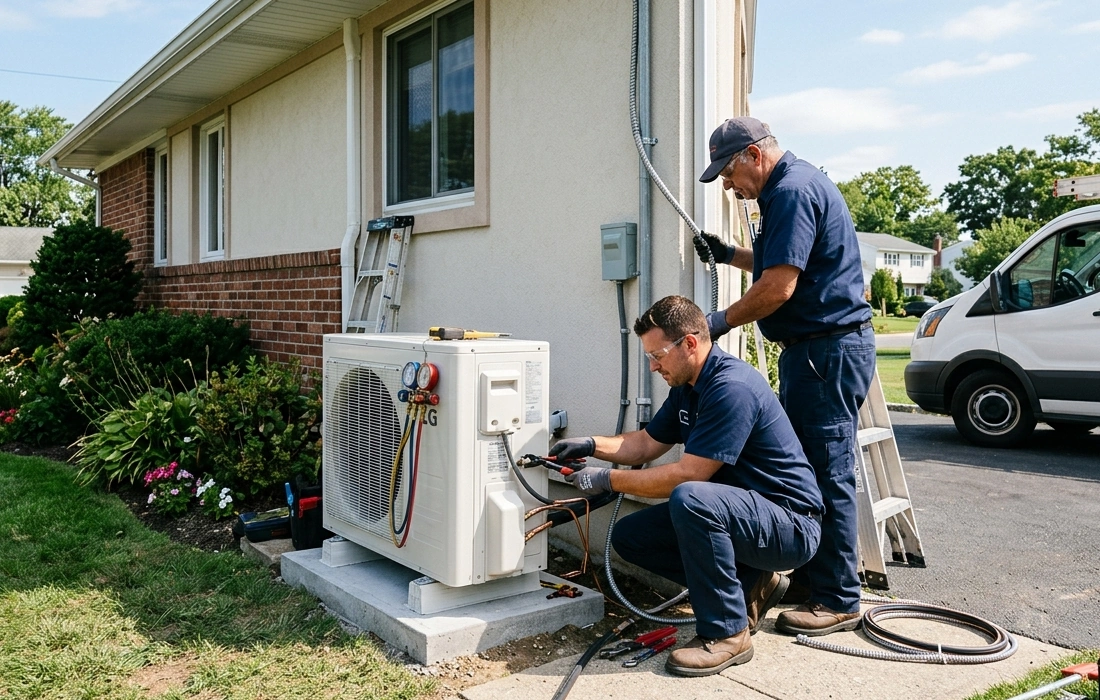
A central AC system is a matched system. The outdoor condenser works with indoor equipment, refrigerant piping, airflow, ductwork, electrical components, condensate drainage, controls, and the thermostat. Comparing quotes without comparing that scope is how homeowners end up comparing apples, oranges, and one mysterious invoice written in contractor hieroglyphics.
Outdoor equipment
The condenser contains the compressor, condenser coil, fan, controls, and refrigerant circuit components. Capacity, efficiency, staging, sound level, refrigerant platform, and equipment tier all affect cost.
Indoor equipment
The evaporator coil and/or air handler must be compatible with the outdoor unit. A proper replacement may require a new matched indoor coil, air handler, drain components, filter setup, or transitions.
Installation scope
Line-set condition, equipment access, condenser pad, disconnect, wiring, thermostat, duct transitions, drainage, commissioning, removal of old equipment, and required local approvals can all change the final number.
If your existing system is still repairable, start with Air Conditioning Repair Long Island. For a broader service overview, see Manzo’s Central AC Repair & Installation page or the full Long Island HVAC services hub.
What changes the cost of replacing central air?
| Project profile | 2026 planning range | What typically changes the price |
|---|---|---|
| Straightforward full replacement | $7,000-$12,000 | Existing ducts are usable, access is reasonable, electrical is adequate, and the job is a conventional matched indoor/outdoor replacement. |
| Higher-efficiency or more involved replacement | $10,000-$16,000+ | Higher SEER2, staged/variable equipment, larger capacity, air-handler work, line-set changes, controls, tight attic access, or duct transitions. |
| Major modifications / extensive duct work | $12,000-$20,000+ | Substantial duct repair/replacement, zoning changes, electrical upgrades, difficult access, structural coordination, or major airflow corrections. |
| Two-system or complex multi-zone home | $18,000-$30,000+ | Two condensers/air handlers, larger homes, multiple zones, extensive duct or control work, and premium equipment can push the project higher. |
Ask what is included before deciding one estimate is “cheaper.”
A replacement proposal should make it possible to see what you are buying. A lower number can be a legitimate simpler scope, or it can be missing work another contractor included. The only sane comparison is line by line.
Equipment match
Ask for the outdoor-unit and indoor-unit model families, nominal capacity, efficiency rating, refrigerant, and whether the proposed combination has a certified matched-system rating. If a quote keeps an older indoor coil or air handler, ask why that is technically appropriate.
Included installation work
Confirm whether the price includes equipment removal, condenser pad or mounting, line-set reuse or replacement, evacuation and charging, duct transitions, drain work, thermostat/control setup, electrical disconnect work, startup, testing, and required local approvals.
What could change later?
Ask what conditions could legitimately change the final price after work begins. Hidden duct damage, inaccessible line sets, electrical deficiencies, or structural/access issues can matter, but a good proposal should identify likely variables before the installation day whenever practical.
This is also where homeowners should separate new AC installation from replacement. Adding central air to a home that never had ducts, returns, electrical infrastructure, or an indoor air handler is a different project from replacing an existing matched system.
Tonnage matters, but “bigger” is not the goal.
Residential central air equipment is commonly described in tons of cooling. One ton equals 12,000 BTU per hour of nominal cooling capacity. A 2-ton system and a 5-ton system do not carry the same equipment cost, airflow requirements, electrical demand, or installation considerations.
But sizing should not be guessed from square footage alone. Insulation, windows, sun exposure, air leakage, ceiling height, additions, duct design, occupancy, orientation, and the home’s actual cooling load all matter. Oversized AC can cycle too quickly, reduce humidity removal, create temperature swings, and make a house feel clammy even when the thermostat says the temperature is fine.
That is why a replacement estimate should ask whether the old system was correctly sized instead of automatically copying the tonnage on a 15-year-old nameplate. If the home never cooled evenly, ran constantly, or felt humid, the replacement process is the moment to investigate the reason.
Common tonnage questions to ask
- What size is the existing system?
- Was the old system keeping up during design conditions?
- Were there hot rooms, humidity problems, or short cycling?
- Does the duct system support the required airflow?
- Did additions or renovations change the load?
- Is a load calculation appropriate before final equipment selection?
SEER2 and the 2026 refrigerant transition both affect replacement decisions.
SEER2: efficiency is part of the price
SEER2 is the current seasonal efficiency metric used for central air conditioners and heat pumps. Higher-efficiency equipment generally costs more up front because the system may use better coils, staged or variable compressors, advanced fan controls, and more sophisticated electronics.
Higher SEER2 is not automatically the best financial choice for every home. The useful comparison is installed cost, expected operating use, comfort goals, dehumidification, sound, equipment features, and how long you expect to stay in the home. The matched-system rating also matters; outdoor and indoor components should be evaluated as a certified combination, not as isolated model numbers.
AHRI’s certified-product directory is a useful authority for checking rated equipment combinations.
Newer lower-GWP refrigerants
Federal technology-transition rules have been moving new residential equipment away from higher-GWP refrigerants used in older systems. In 2026, many new systems are built around lower-GWP refrigerants such as R-454B or R-32, depending on manufacturer and equipment family.
These newer refrigerants can affect equipment compatibility, service tools, installation procedures, indoor-unit requirements, and the wisdom of trying to mix old and new components. A replacement proposal should identify the refrigerant platform and confirm that the indoor and outdoor equipment, controls, and safety requirements are compatible.
For homeowners, the point is not to memorize refrigerant chemistry. It is to understand that “replace only the outdoor unit and keep everything else” may not be technically or economically sensible on an aging system. See the EPA technology-transition guidance for current federal rules.
Good ductwork can protect the budget. Bad ductwork can wreck it.
If the existing ducts are correctly sized, sealed, insulated where needed, and physically sound, a central AC replacement may be able to reuse much of the distribution system. That keeps the project closer to a like-for-like replacement.
But replacement is also when old airflow problems stop hiding. Crushed flex duct, undersized returns, leaky attic ducts, poorly balanced branches, damaged plenums, uninsulated sections, or a return system that cannot feed the new blower can limit the performance of expensive equipment.
Minor duct transitions and sealing are very different from replacing major trunk lines or rebuilding multiple zones. Homeowners should ask the contractor to separate equipment replacement from optional or required duct corrections so the quote is understandable.
For homes where ductwork is impractical, additions need independent control, or only certain rooms need conditioning, compare a central system with ductless mini splits before assuming the old layout must be duplicated.
Controls and electrical work are small lines on the quote until they are not.
Electrical capacity
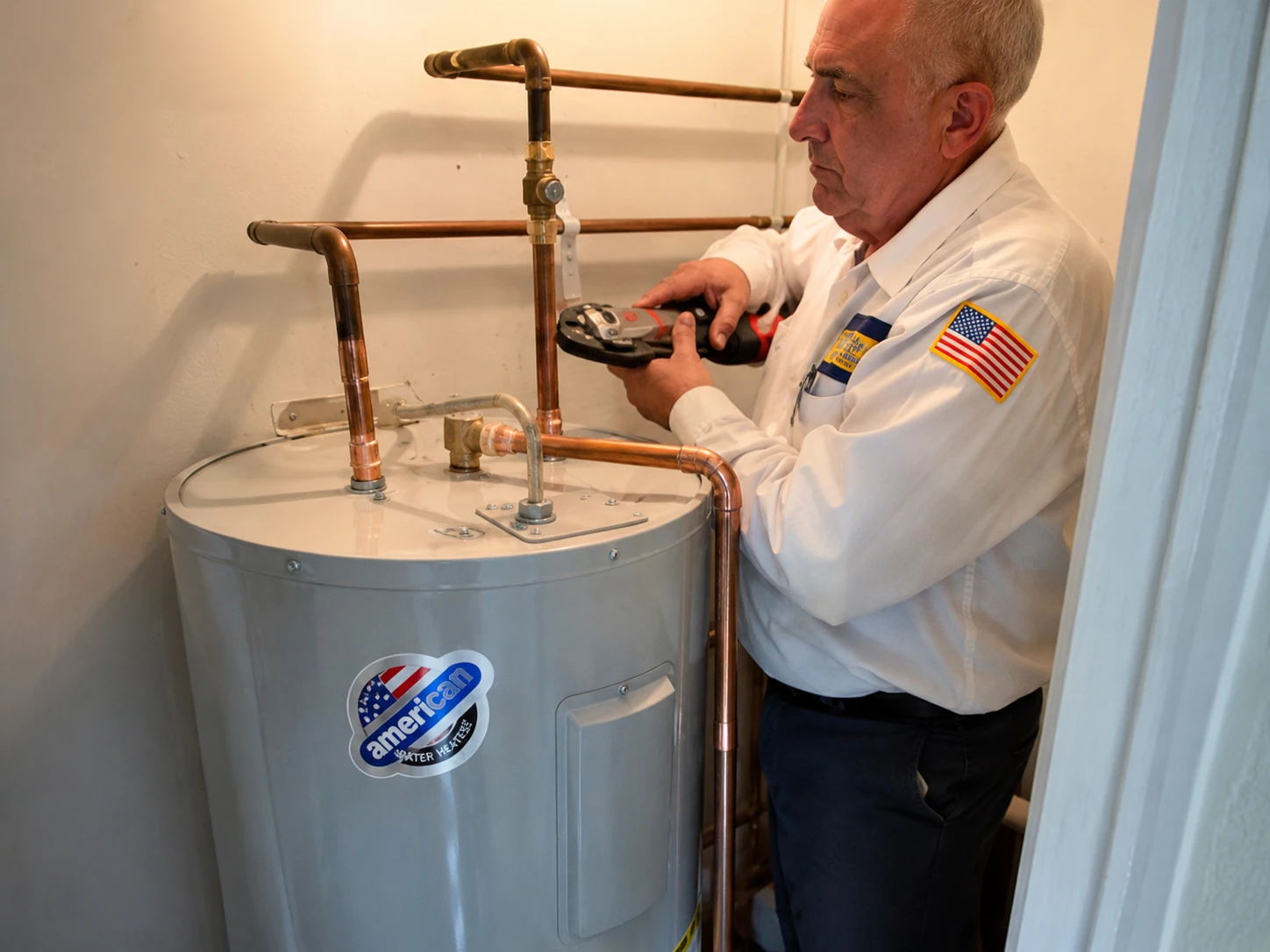
The outdoor unit needs the correct branch circuit, disconnect, overcurrent protection, wiring, grounding, and equipment-specific electrical setup. Older installations sometimes need corrections before new equipment can be commissioned properly.
Thermostat compatibility
A basic single-stage thermostat may not be appropriate for staged or communicating equipment. Smart thermostats can also require compatible wiring, power, controls, and setup. Do not assume the old thermostat should automatically stay.
Condensate + safety
Indoor AC equipment produces water during dehumidification. Drain routing, traps, pans, float switches, pumps where needed, and safe disposal should be part of the installation conversation, especially in attic applications.
When does AC replacement make more sense than another repair?
Age alone should not condemn an air conditioner. A well-maintained system with a repairable problem can deserve repair. But age, repeated failures, refrigerant platform, efficiency, comfort, major-component cost, and overall condition should be considered together.
Repair may make sense when…
- The system has been generally reliable.
- The failure is isolated and repair cost is reasonable.
- The indoor and outdoor equipment are still in good condition.
- Comfort and electric bills have been acceptable.
- The repair is not masking major duct, compressor, or coil problems.
Start with AC repair when diagnosis can restore a sound system without throwing good money at a larger failure.
Replacement becomes more attractive when…
- Major repairs keep stacking up.
- A compressor or coil failure lands on an aging system.
- Older refrigerant equipment is becoming expensive to keep alive.
- The home has chronic humidity, airflow, or comfort problems.
- Efficiency is poor and the system runs excessively.
- Indoor and outdoor components no longer make sense as a matched pair.
For new-system planning, see the parallel Air Conditioning Installation Long Island service.
Before buying cooling-only equipment, compare the heat-pump option.
A ducted air-source heat pump cools the home like central air but can also provide heating. That can make it worth comparing when a central AC system is due for replacement, especially if the homeowner is also thinking about heating costs, electrification, shoulder-season comfort, or future equipment replacement.
A heat pump may cost more than a basic cooling-only AC replacement, and the right choice depends on the home’s heating system, electrical setup, ductwork, load, comfort goals, and equipment design. But Long Island has a practical reason to run the comparison: PSEG Long Island currently lists residential heat-pump rebates for eligible projects and requires use of a participating contractor for those incentives.
That does not mean every central AC replacement qualifies for a rebate. Conventional AC-only equipment should not be advertised as if it automatically receives heat-pump incentives. Review the current PSEG Long Island heat-pump rebate requirements, then compare the installed economics.
See Manzo’s Heat Pump Repair & Installation Long Island for the year-round system option.
$1,000 Off Installation or Replacement
Mention the offer when booking, it cannot be combined with other offers, and it expires 12/31/2026.
View Manzo coupons and current offers. Because promotions change.
Need payment flexibility?
Manzo also publishes a financing option for qualified homeowners, including central AC installation or replacement. Credit decisions and loan terms are determined by the program lenders.
A clean process makes cost comparisons much easier.
Inspect
Review the existing condenser, indoor unit, refrigerant lines, ductwork, thermostat, drainage, electrical setup, access, and comfort complaints.
Size + scope
Confirm whether existing tonnage and airflow make sense, then identify which components can stay and which need replacement or modification.
Compare options
Explain efficiency levels, equipment features, cooling-only versus heat pump, required duct/electrical work, and any verified savings or financing.
Install + commission
Replace equipment cleanly, verify airflow and controls, test drainage and electrical operation, and confirm the system is operating as intended.
Before choosing a contractor, homeowners can also review Manzo’s customer reviews and browse the Long Island Plumbing & HVAC Resource Hub for related guides.
AC replacement planning across Long Island
Manzo serves homeowners across Nassau County and Suffolk County. This cost guide is especially relevant to homeowners in Wantagh, Seaford, Bellmore, Merrick, Massapequa, and Levittown, where aging central-air systems, attic ductwork, additions, and older electrical/comfort layouts can make replacement scope vary from house to house.
AC replacement cost FAQs for Long Island homeowners
How much does it cost to replace central AC on Long Island in 2026?
For planning purposes, a straightforward full central AC replacement with usable existing ductwork often falls around $7,000 to $14,000 on Long Island. Higher-efficiency equipment, larger systems, difficult attic access, electrical work, duct modifications, zoning, or multiple systems can move the project well beyond that range. These are market ranges, not Manzo quotes.
Why do Long Island AC replacement quotes vary so much?
Quotes can include very different scopes. One may cover only major equipment, while another includes a matched indoor coil or air handler, line-set work, duct transitions, electrical corrections, thermostat, condensate protection, removal, commissioning, and other installation requirements. Compare what is included before comparing the bottom-line price.
Does AC tonnage change replacement cost?
Usually, yes. Larger-capacity equipment generally costs more and may require more airflow, larger duct capacity, different electrical requirements, and more expensive matched components. But the goal is correct sizing, not simply buying more tonnage. A home with chronic humidity or short cycling may already have an oversized system.
Do I need to replace both the indoor and outdoor AC units?
Often it makes sense to replace matched indoor and outdoor components together, especially when the equipment is aging, uses an older refrigerant platform, or the new condenser requires a specific compatible coil or air handler. The existing system should be evaluated as a complete match before deciding to keep one major component.
How much can ductwork add to an AC replacement?
Small transitions, sealing, or localized repairs may add modest cost. Rebuilding trunks, replacing extensive attic ductwork, changing return-air capacity, or redesigning zones can add thousands of dollars. The quote should separate required duct corrections from optional upgrades so the homeowner can see what is driving the total.
Is a higher SEER2 central AC worth the extra cost?
Sometimes. Higher efficiency can reduce electricity use and may improve comfort, staging, sound, or humidity control, but it usually raises equipment cost. The best choice depends on how heavily the system runs, expected years in the home, comfort priorities, equipment features, matched-system ratings, and the installed price difference.
What refrigerant should a new 2026 AC system use?
Many new 2026 residential systems use lower-GWP refrigerants such as R-454B or R-32, depending on manufacturer and equipment family. The important issue is compatibility: the indoor and outdoor equipment, service procedures, controls, and required safety provisions need to match the selected system. Do not choose equipment based on refrigerant name alone.
Should I replace my AC or repair it one more time?
Repair can be sensible when the system is generally reliable and the failure is isolated. Replacement becomes more compelling when major repairs repeat, the compressor or coil fails on an aging system, refrigerant service is expensive, efficiency is poor, or the home still has comfort and humidity problems after prior repairs.
Is a heat pump more expensive than replacing central AC?
A heat pump can cost more than a basic cooling-only replacement because it is designed to provide both heating and cooling, but the final difference depends on equipment, controls, electrical work, ductwork, and project scope. On Long Island, eligible heat-pump projects may also have PSEG Long Island incentives, so compare net installed cost rather than sticker price alone.
Does Manzo offer financing for AC replacement?
Yes. Manzo’s current financing page specifically lists central AC installation or replacement among projects homeowners may finance. Financing is subject to approval, and credit decisions and loan terms are determined by the program lenders. Use the official Manzo financing page for the current application path and disclosures.
Does Manzo have a current AC replacement coupon?
Yes, as of August 17, 2026, Manzo’s website publishes a $1,000 off installation or replacement offer that includes central air. The posted terms say the offer must be mentioned when booking, cannot be combined with other offers, and expires December 31, 2026. Always verify the live coupons page before publishing or extending the offer.
Can I claim a federal tax credit for a central AC installed in 2026?
Do not assume so. The IRS states that the Energy Efficient Home Improvement Credit under Section 25C ended for qualified property placed in service after December 31, 2025. Homeowners should verify any current federal, state, utility, or local incentive before making a purchase decision.
Get the house-specific number instead of guessing from a national average.
Call Sal Manzo Plumbing, Heating & Cooling to evaluate your existing equipment, ductwork, controls, electrical needs, and replacement options across Nassau and Suffolk County.